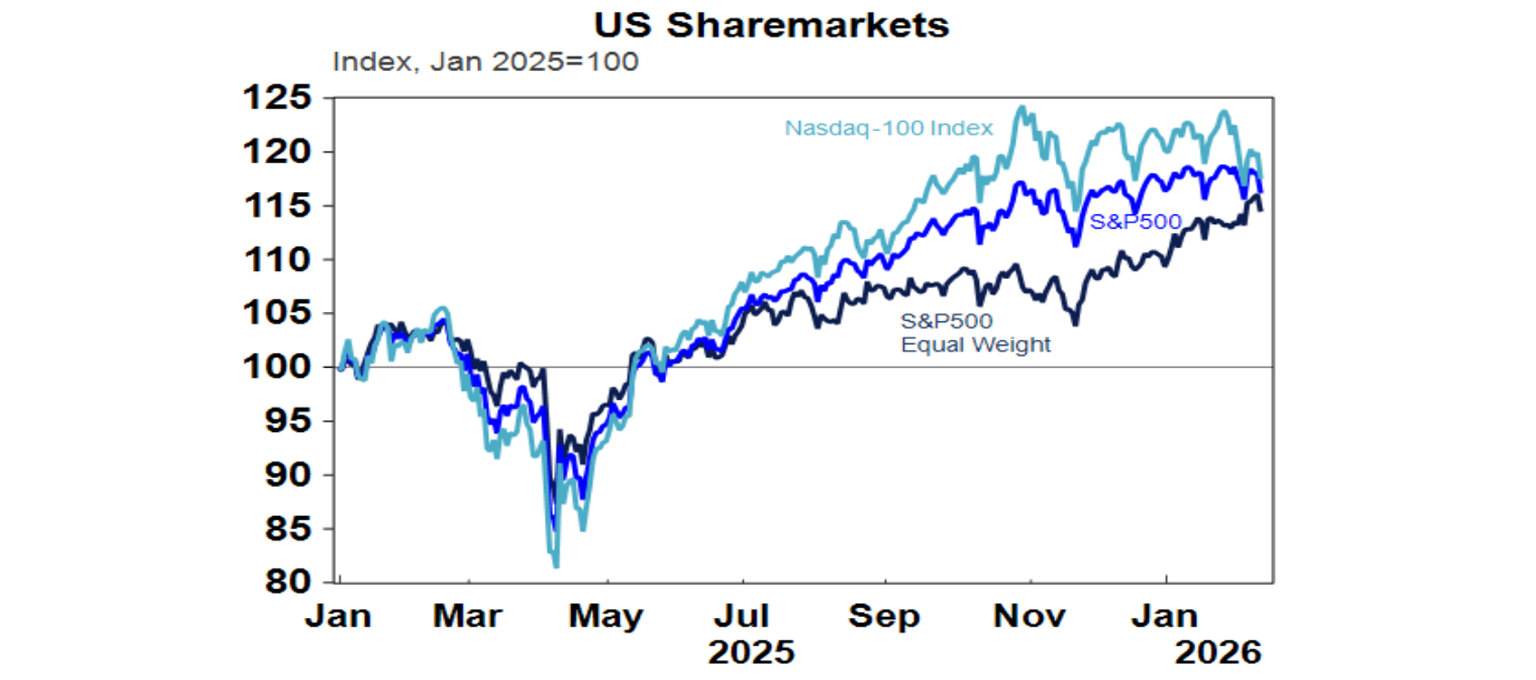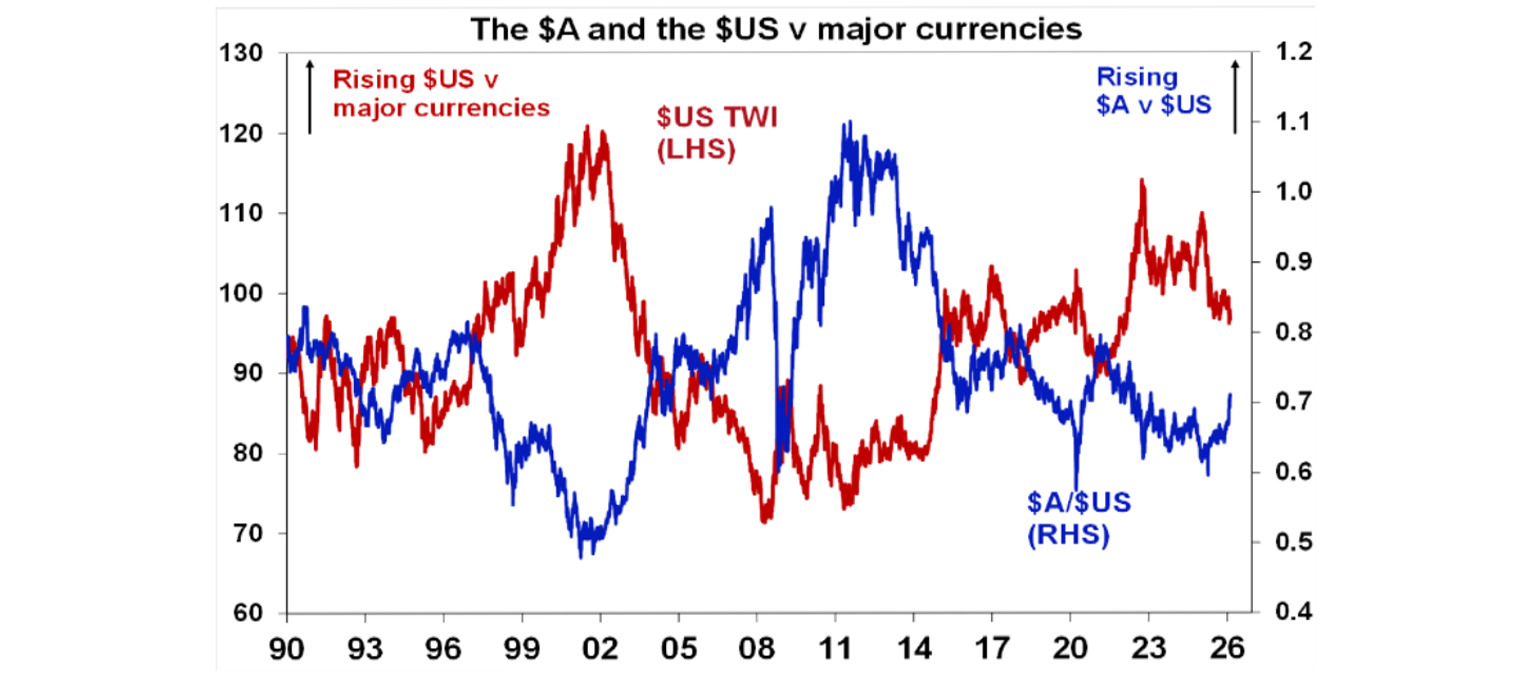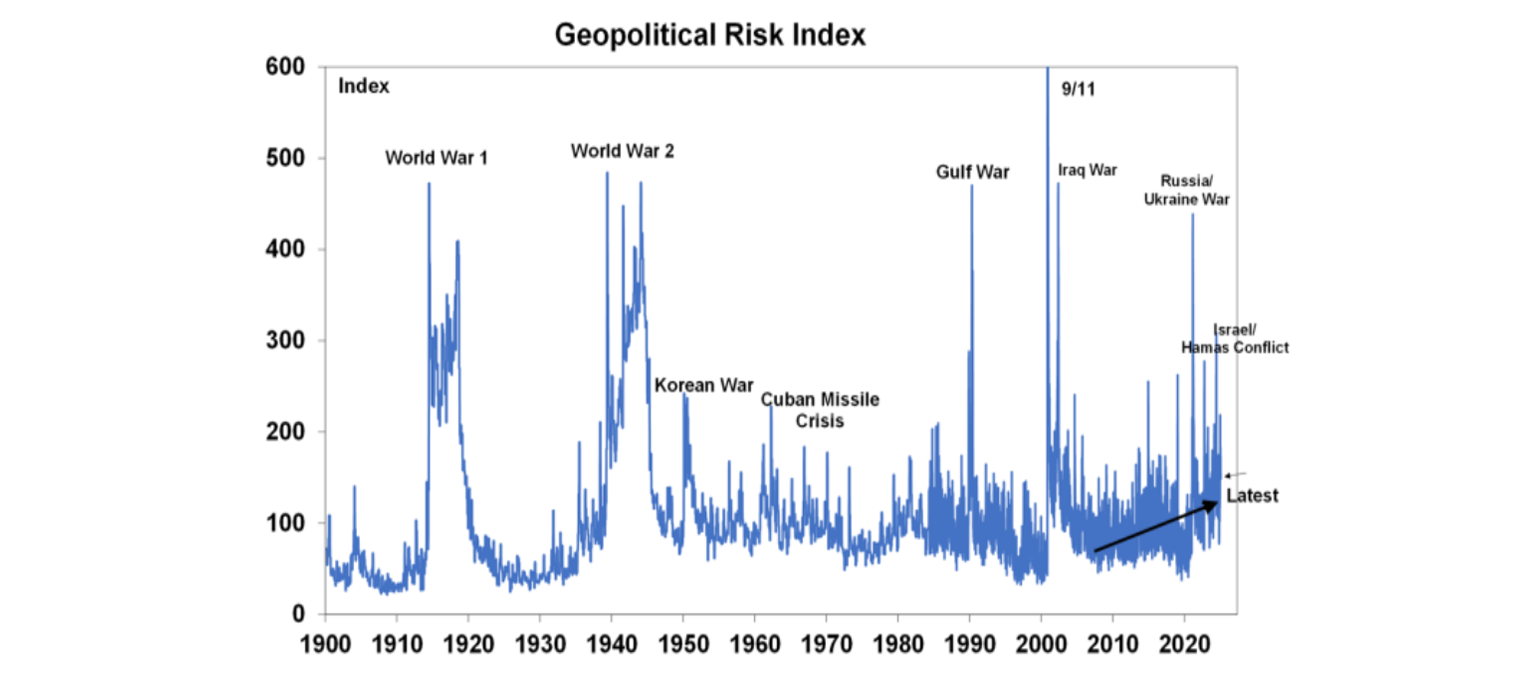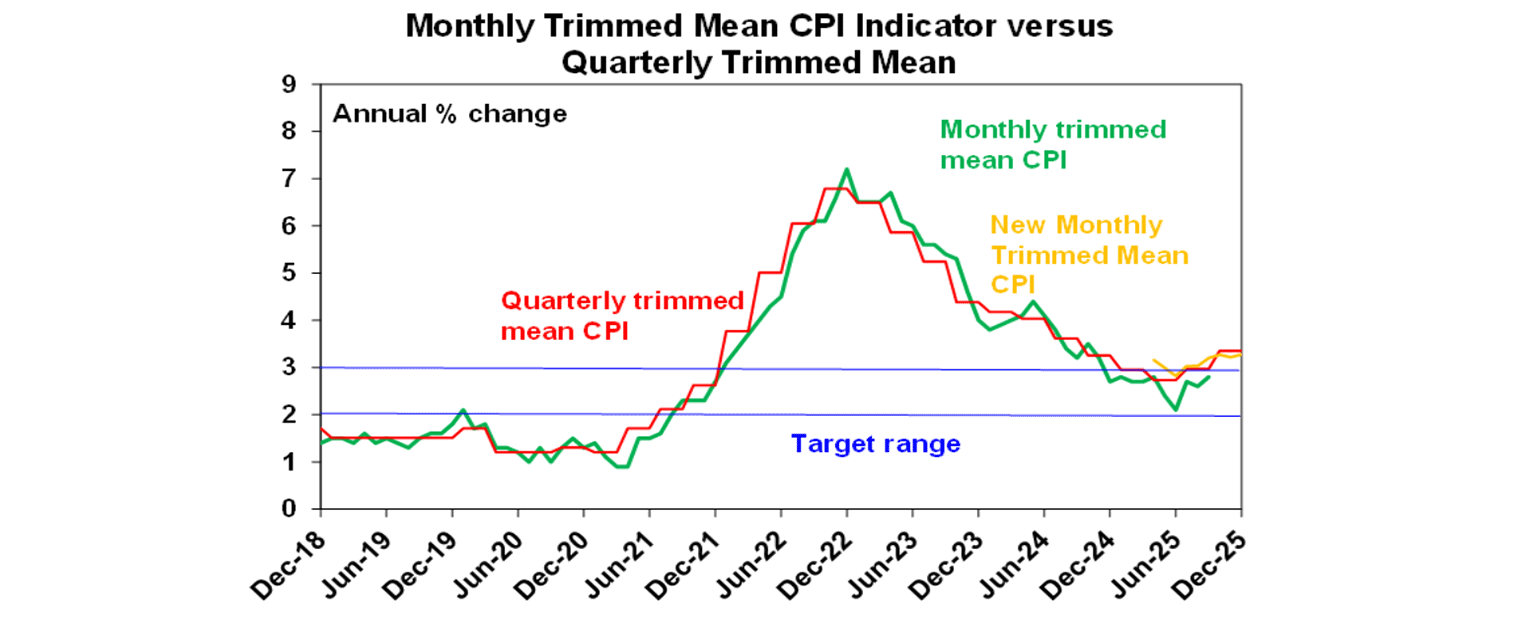
The RBA holds rates at 3.6% and warns of rate hikes next year

By Dr Shane Oliver – Head of Investment Strategy and Economics and Chief Economist, AMP Capital | 10 Dec 2025

Key points

  • The RBA left its cash rate on hold at 3.6% as widely expected at is December meeting.
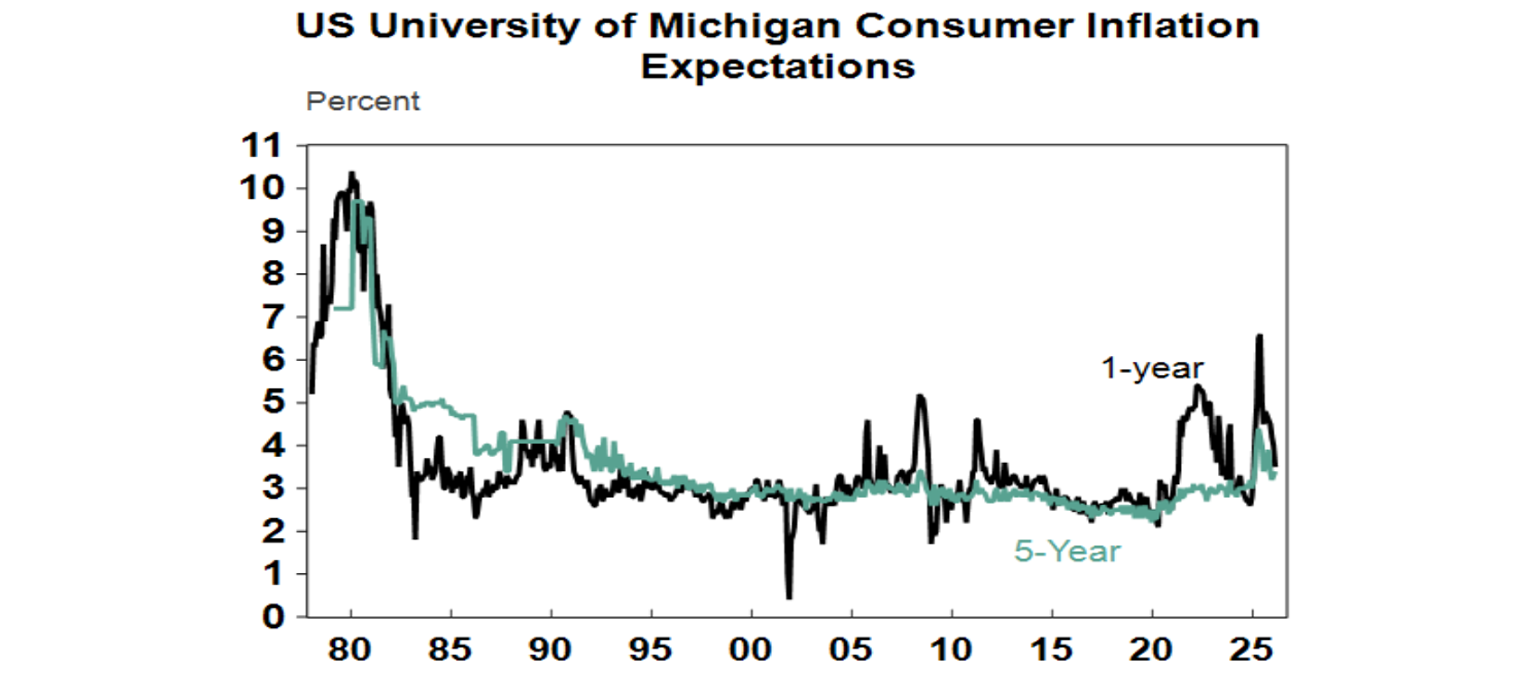
  • Its commentary also became more hawkish (ie leaning towards a rate hike) on the back of the further rise in inflation in October. Governor Bullock reiterated that the Board will be data dependent and effectively warned it may have to raise rates if inflation does not fall back.
  • We now expect the RBA to leave rates on hold next year with a fall back in inflation and still fragile consumer spending avoiding a rate hike but concerns about capacity constraints as the economy recovers likely preventing a rate cut and keeping the risk of a rate hike high.

RBA holds at 3.6% with a far more hawkish tone

2025 initially saw turmoil as US President Trump announced tariffs that were much higher than expected along with a bunch of other moves to upend US institutions and the global economic order. But the global economy held up okay. Key big picture themes for investors were:

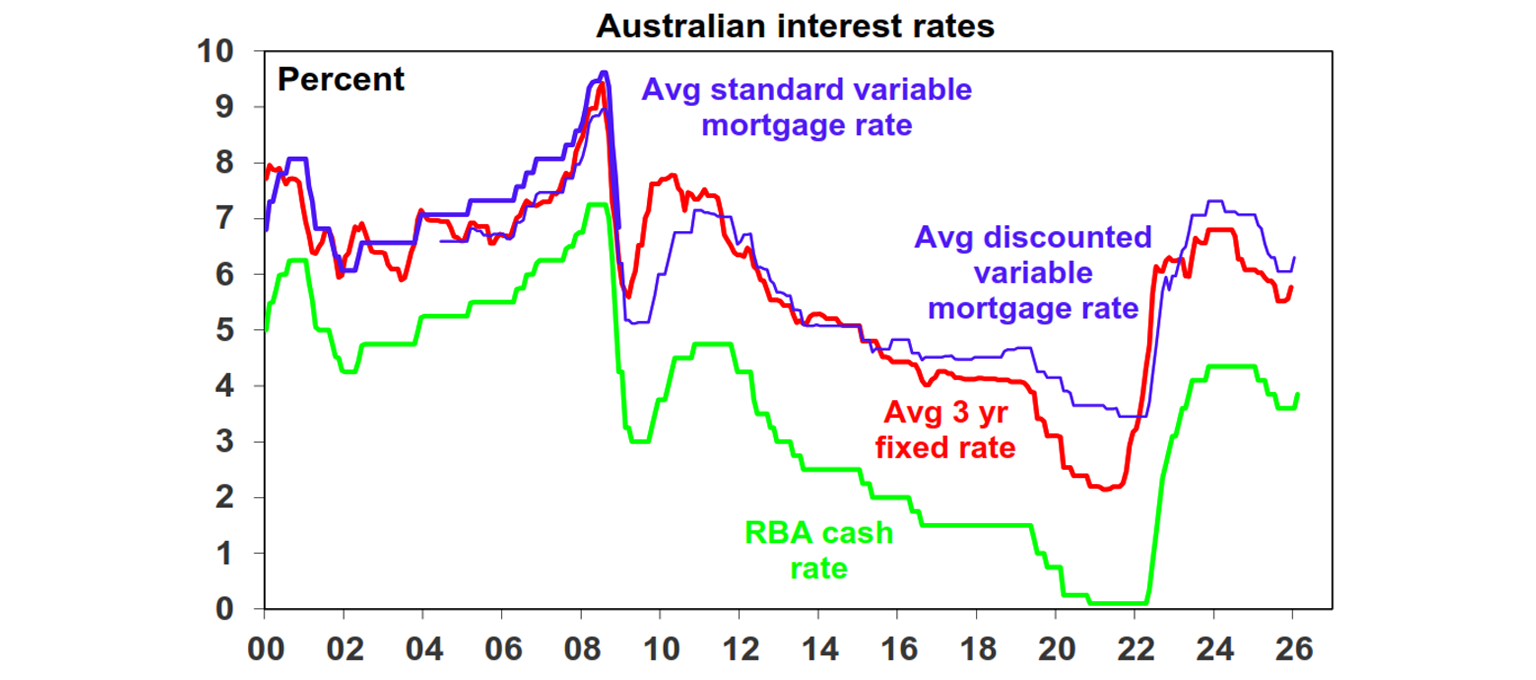
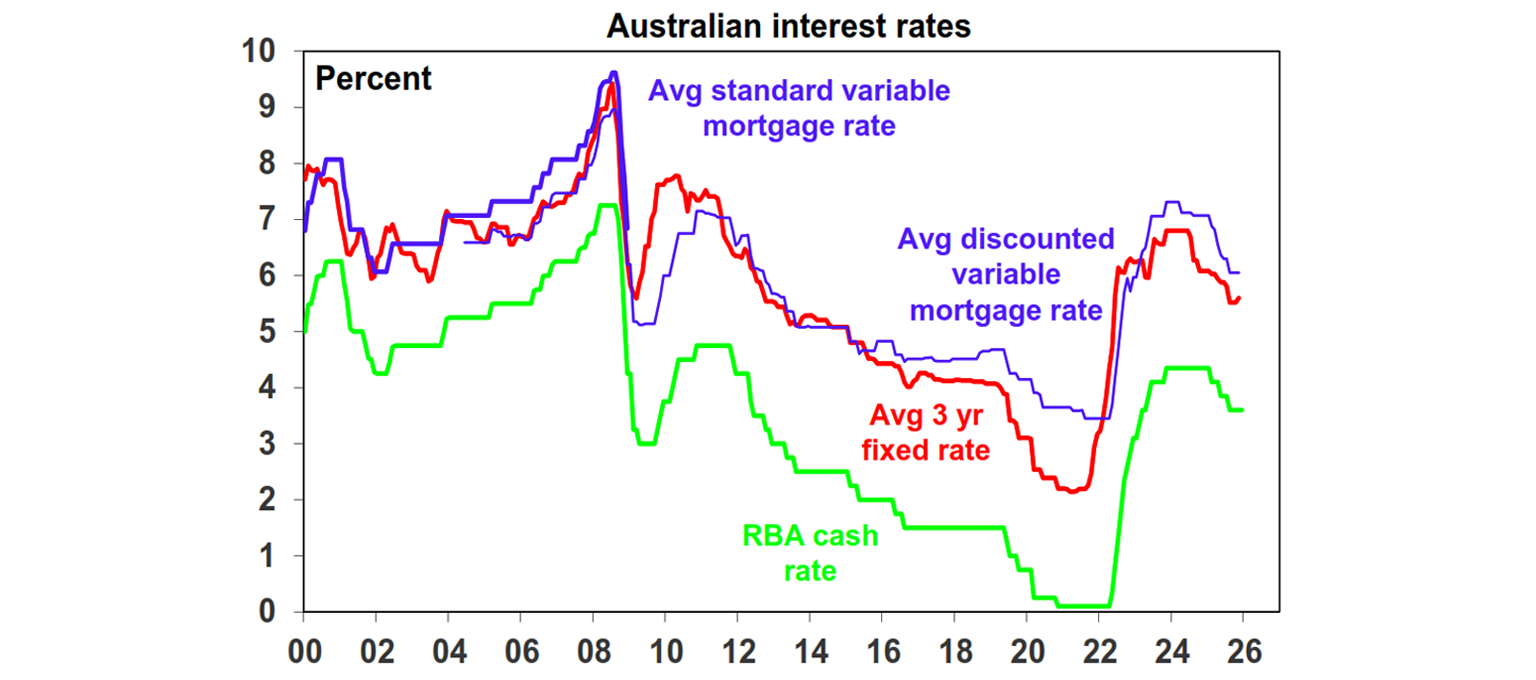
The RBA’s decision to leave rates on hold at 3.6% was no surprise with it being the consensus amongst all 29 economists surveyed by Bloomberg and the money market factoring in zero chance of a change. The decision leaves the RBA having only reversed three of the 13 rate hikes seen in 2022 and 2023 (not that a cut back to a 0.1% cash rate was expected) and mortgage rates around levels prevailing 13 years ago.

Source: Bloomberg, AMP

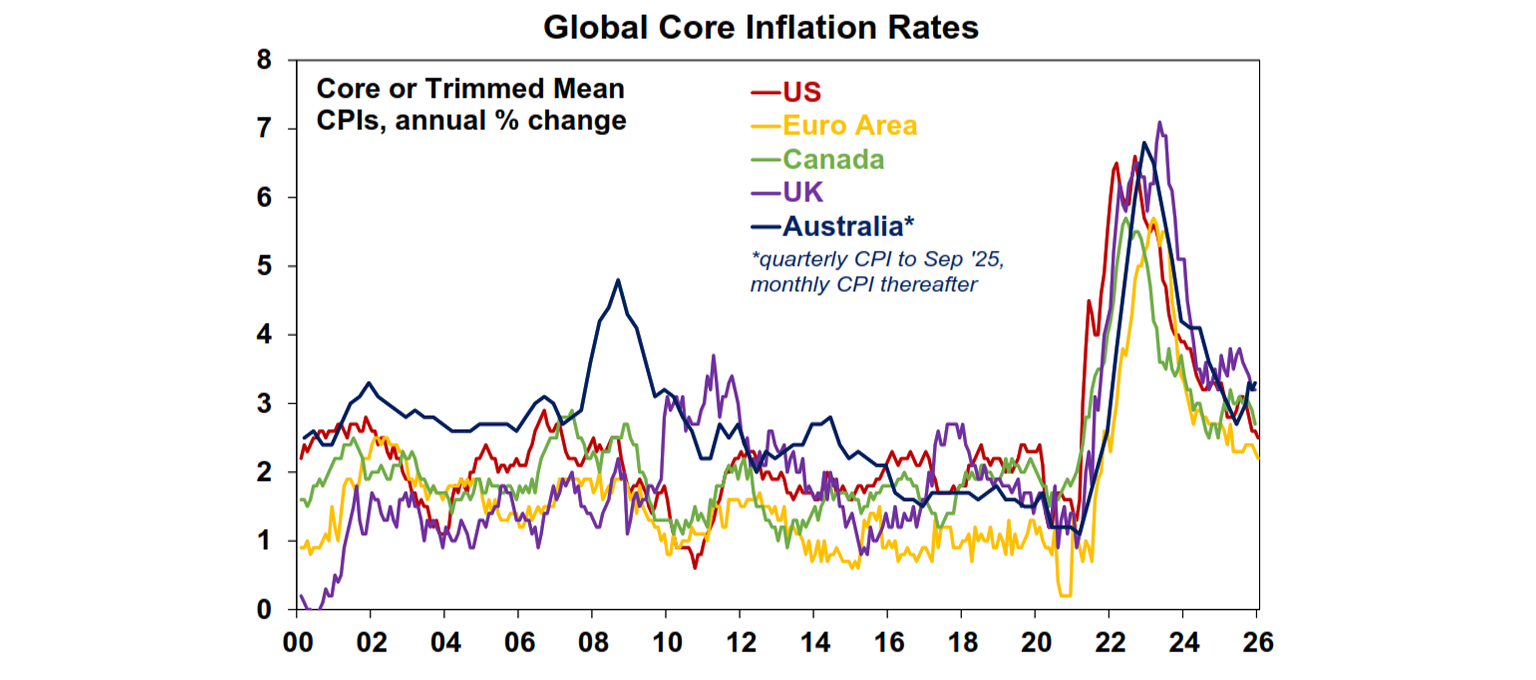
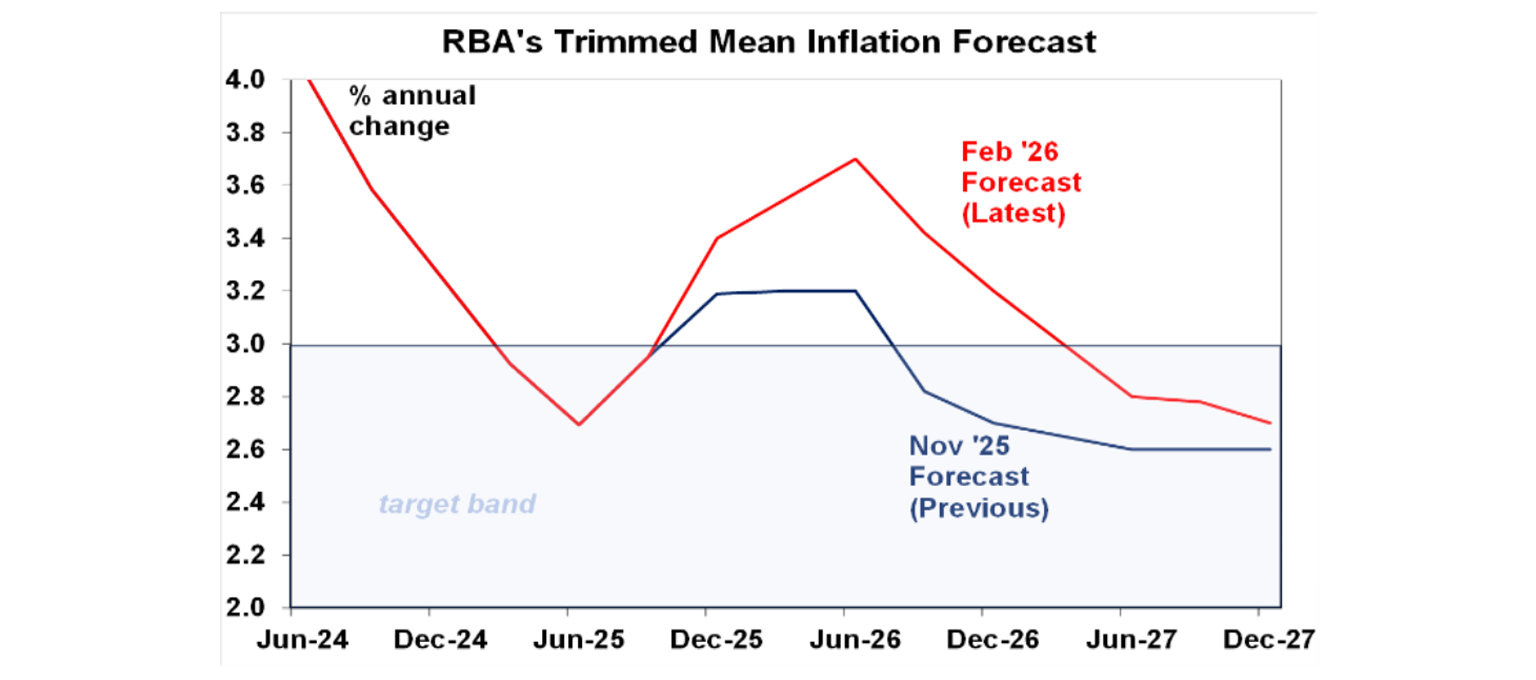
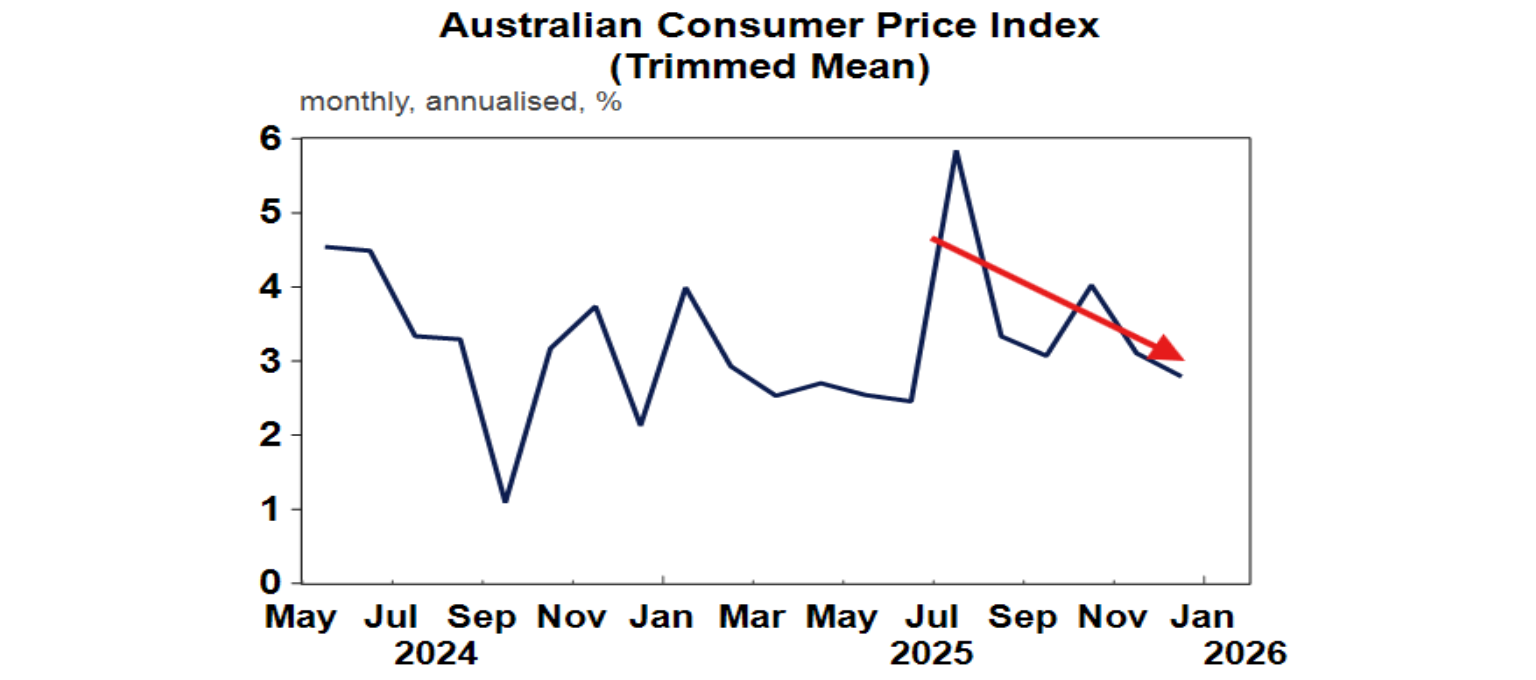
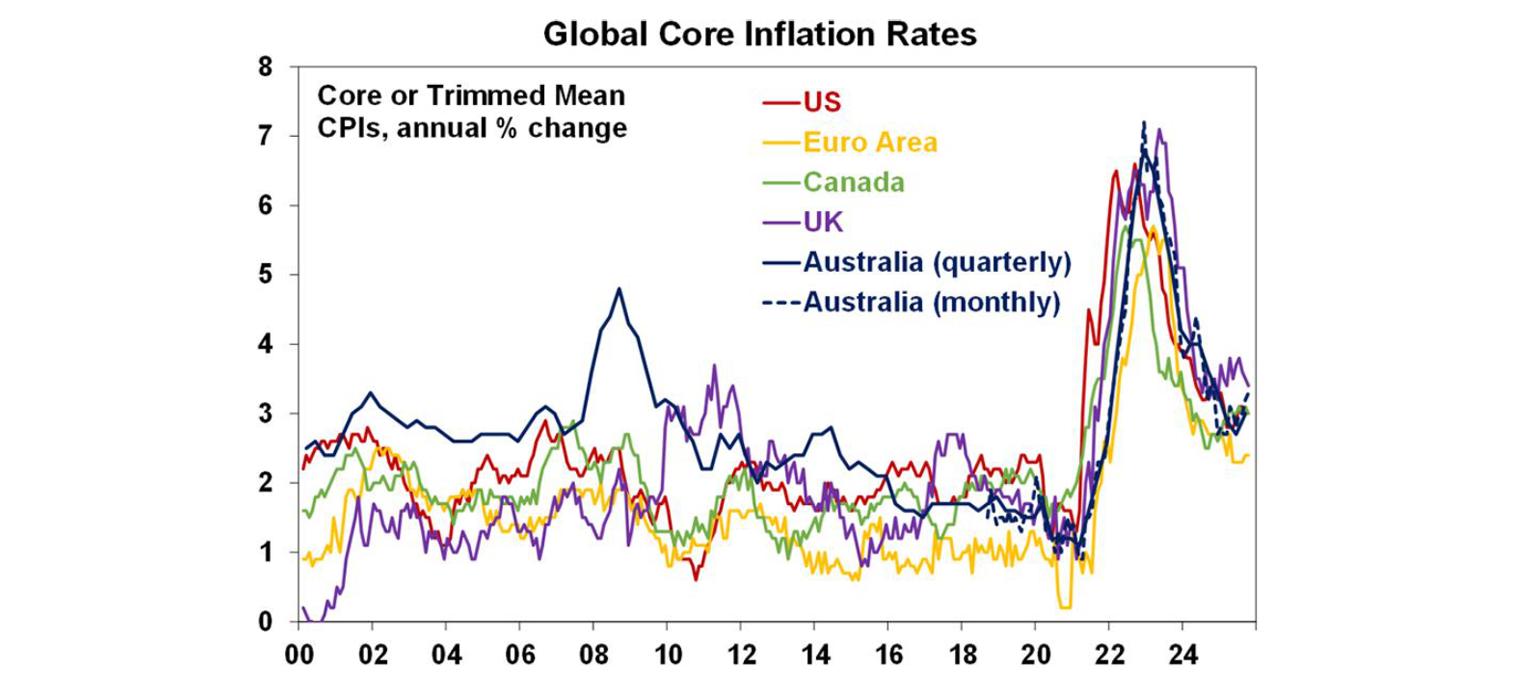
The RBAs on hold decision follows the further increase in inflation seen in the new October monthly CPI which occurred in both headline and trimmed mean (or underlying) inflation and has taken Australian inflation back above many comparable countries. See the next chart.

Source: Bloomberg, AMP

Given the recent run of hotter inflation and demand data it was also not surprising to see the RBA further ramp up its hawkish commentary, but it’s now explicit after Governor Bullock’s press conference that the RBA now has a tightening bias. To be sure, the RBA expressed caution about reading too much into the new monthly CPI showing a further rise in inflation and reiterated that it expects some of the rise in underlying inflation to be temporary.

But its commentary was progressively more hawkish compared to last month with the post meeting Statement noting that the rise in inflation may be becoming more broad based, growth is picking up including for private demand, the housing market is continuing to pick up, the labour market remains a little tight, surveys show capacity utilisation above its long-run average, growth in unit labour costs remains high and if the pickup in the private sector continues it will add to capacity pressures. All up the RBA concludes that “the risks to inflation have tilted to the upside”, whereas the language previously noted “uncertainty…in both directions”. And at the same time the RBA notes that the impact from global uncertainties has been minimal.

Governor Bullock’s press conference comments came across as even more hawkish than the post meeting Statement. In particular she noted that the RBA did not consider a cut but did consider circumstances that may drive a hike, it did not see cuts in the “foreseeable future” so its about a hold or hikes and she reiterated a recent warning that “if inflation pressures look to be more persistent then it..might have to consider whether we need to raise rates.” And further that “if it looks like inflation is not coming back to the band then the Board will have to take action and it will.”

This effectively leaves the door wide open for higher interest rates next year if needed.

The RBA also indicated it will remain data dependent and, on this front, December quarter CPI data to be released in late January ahead of the RBA’s next meeting in February will be key as to whether we see a rate hike early next year.

We expect the RBA to leave rates on hold in 2026, but the risks are now a bit more on the upside

We are now forecasting rates on hold through next year, amidst conflicting economic indicators.

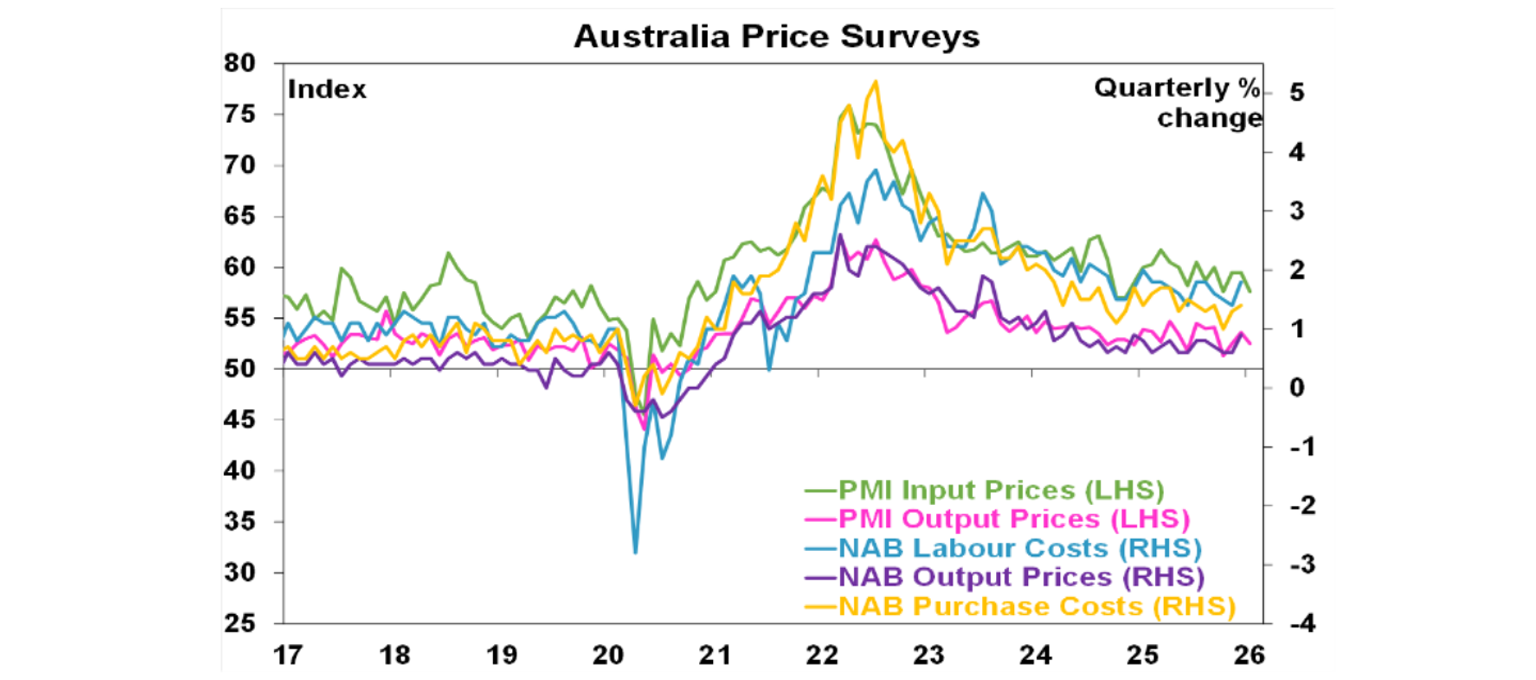
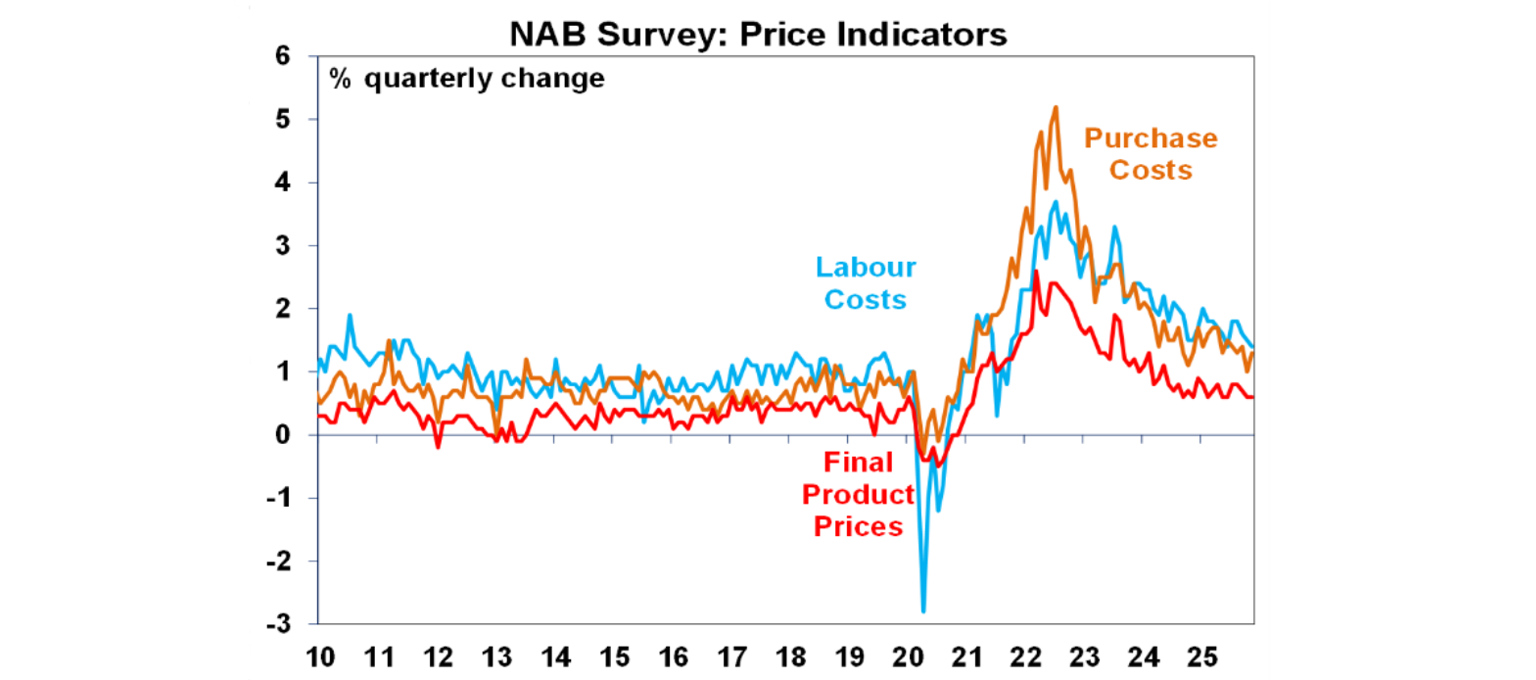
  • On the one hand, the rising trend in unemployment, falling job openings, the tendency for economic data to run hot and cold, uncertainty around the new monthly CPI and business surveys suggesting its pick up could be partly temporary (with final product price rises in the NAB survey remaining benign – see the next chart) and the fragile consumer recovery (with, eg, the NAB business survey reporting easing consumer sector orders) suggest that it’s too early to be considering rate hikes. And it’s arguable that potential economic growth at present is really now above 2%yoy given productivity growth of 0.8%yoy and labour force growth of 1.9%yoy, rather than at 2%yoy which is around the economy’s current growth rate.

Source: Bloomberg, AMP

  • But on the other hand, the strengthening trend in domestic demand growth and consumer spending, rising capacity utilisation in the NAB survey along with the renewed rise in inflation runs the risk that the economy is bumping into capacity constraints and possibly suggests that monetary policy is no longer restrictive. This would suggest that the risks are skewed to a rate hike next year.

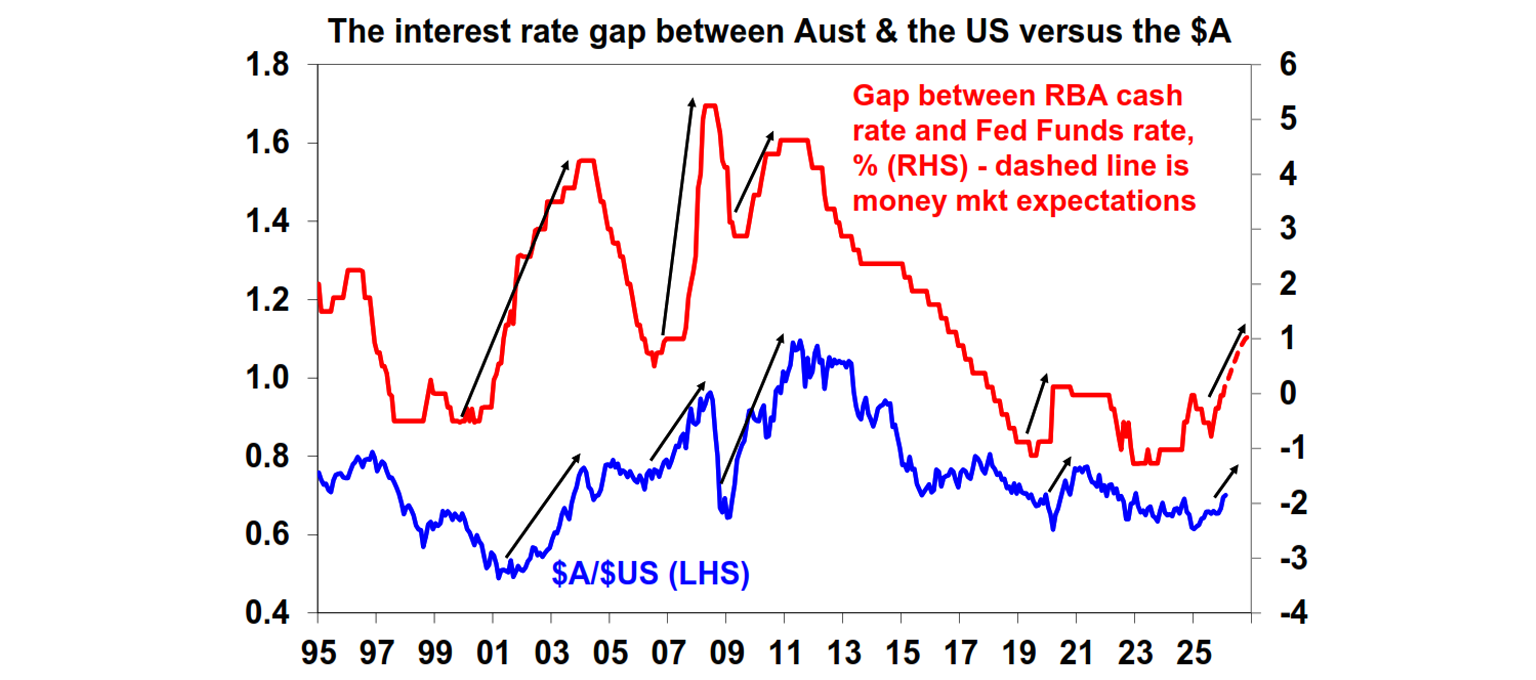
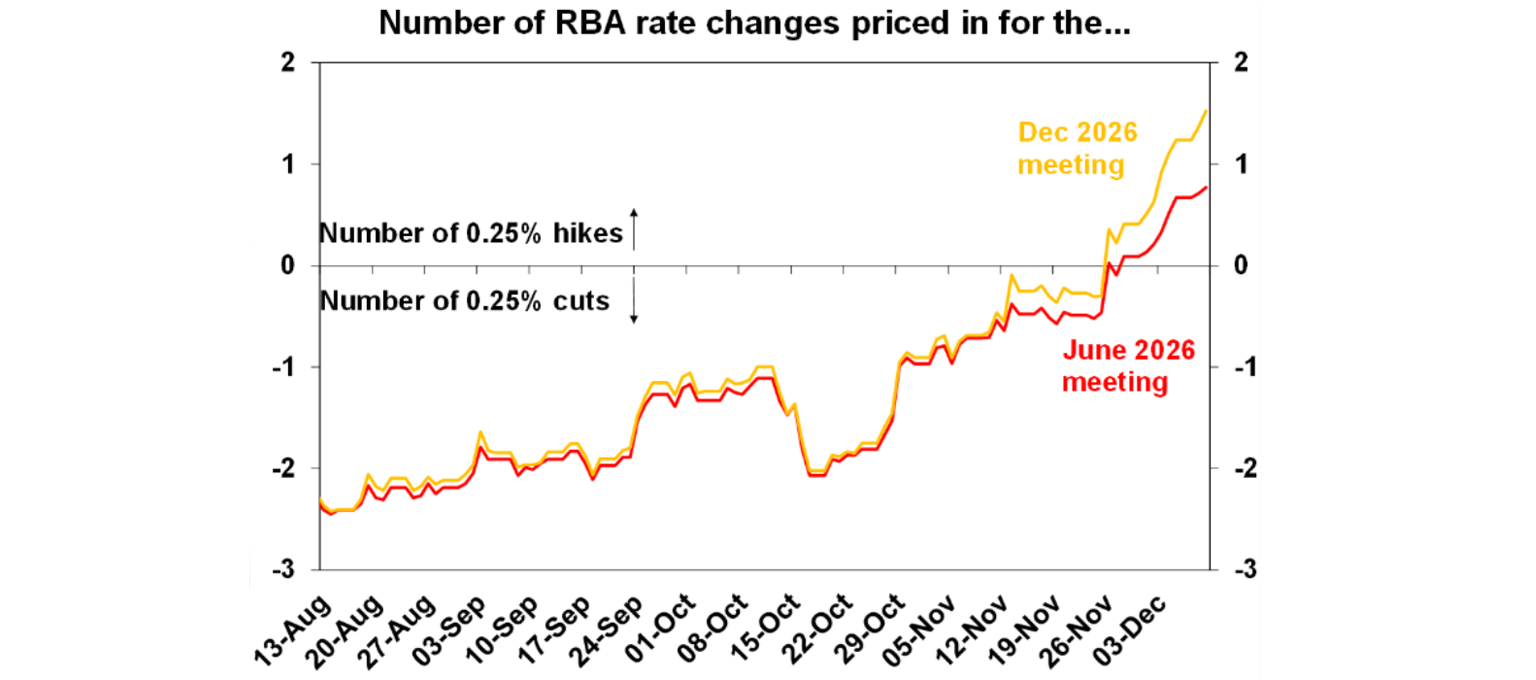
So, on balance we expect to see the cash rate remain at 3.6% in 2026, with the swing back to rate hikes more a story for 2027. But we concede that the risks look like they are now a bit more to the upside on rates in 2026. However, our assessment is that the swing in the money market from expecting 2 or 3 more cuts after the August RBA meeting to now expecting nearly two hikes next year is premature and a bit too extreme.

Source: Bloomberg, AMP

That said as noted above the key to what happens early next year will be the December quarter CPI to be released in late January, with the November CPI on 7th January providing some early indication. Our assessment is that underlying inflation will drop back a notch to 0.8%qoq or slightly less from 1%qoq in the September quarter – partly supported by the weaker trend in final product prices from business surveys – allowing the RBA to remain on hold at its February meeting. Of course, if trimmed mean inflation in the December quarter does not fall back as we expect (and comes in around 0.9%qoq or more) than a hike as early as February is possible. Note that the RBA’s implied forecast in its November Statement on Monetary Policy is 0.8%qoq.

The bottom line

While the RBA is rightly more hawkish in order to send a signal that it’s committed to getting inflation back to target and therefore to help keep inflation expectations “well anchored”, our base case is that rates will be left on hold next year at 3.6% as inflation falls back, albeit the risks are now skewing a bit to the upside. December quarter CPI inflation is the key to what happens early next year on rates.

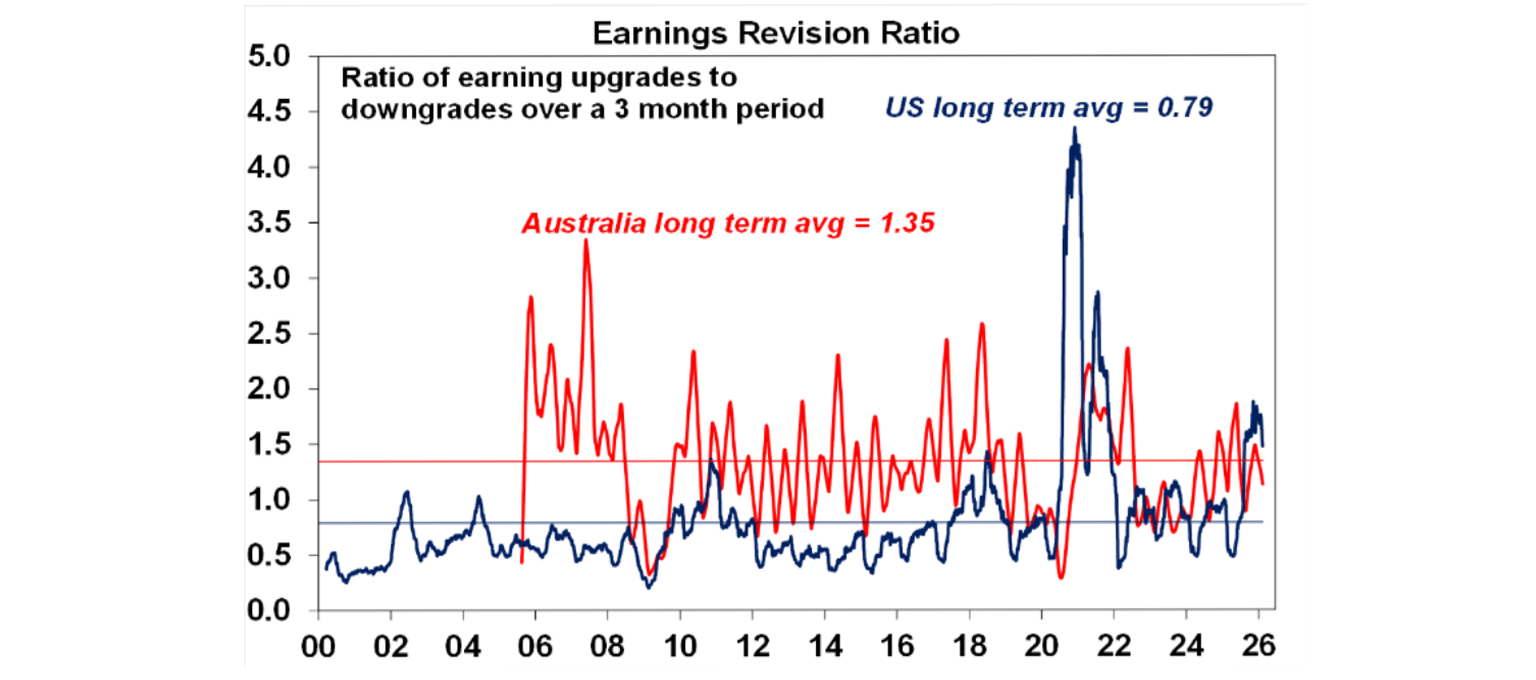
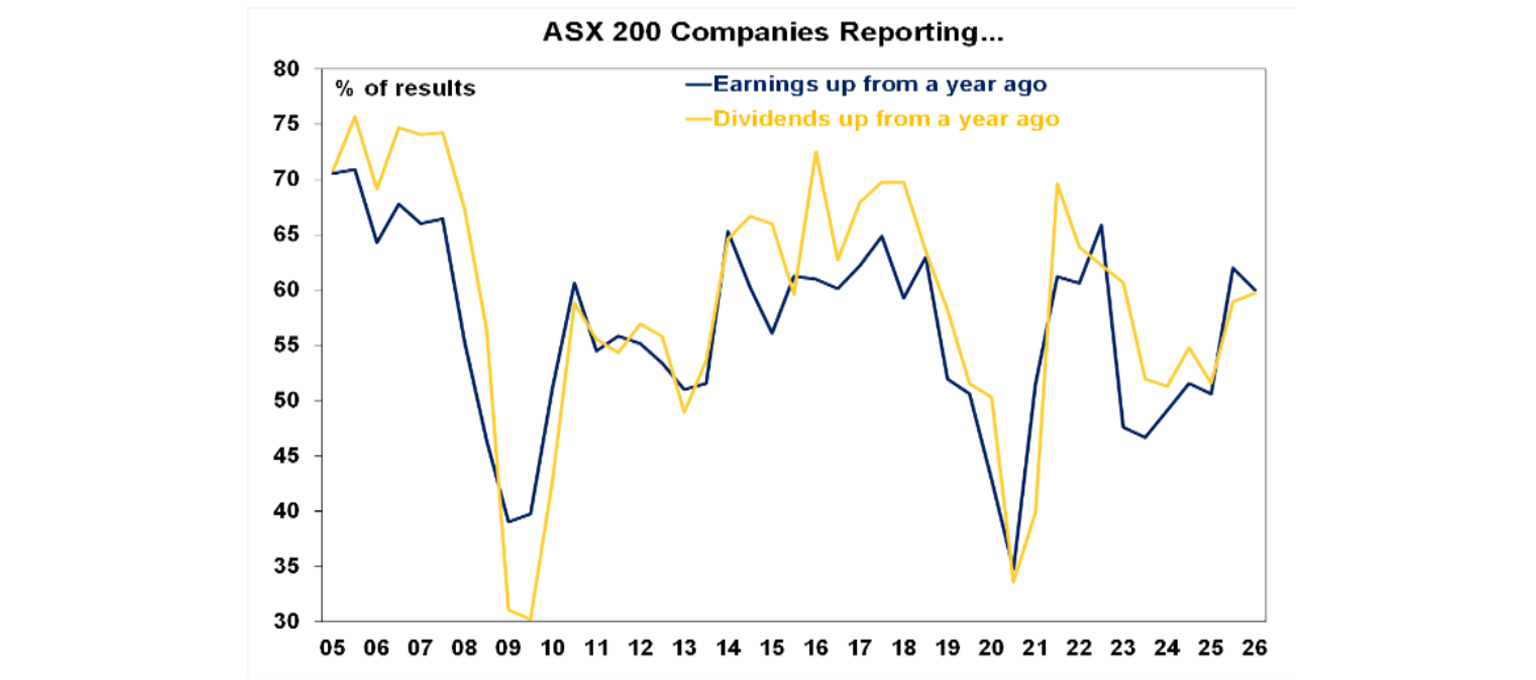
It’s also worth noting that while rates bottoming at 3.6% is not good news for those with a mortgage it may not be such a bad thing to the extent that it reflects a more positive economic outlook as this will underpin a return to profit growth in Australia after three years of falling profits. Of course, it won’t be so good if inflation stays above 3%yoy.

And for those wondering – Governor Bullock noted that the RBA will look through the impact of the ending of the electricity rebates on inflation next year, just as they looked through their impact when they were applied.

Australian home prices up solidly – expect some slowing in 2026

By Dr Shane Oliver – Head of Investment Strategy and Economics and Chief Economist, AMP Capital | 1 Dec 2025

Key points

  • Cotality data shows national average home prices rose strongly again in November, but with the pace of growth slowing slightly to 1%mom.
  • Near record low vacancy rates is contributing to a pickup in annual rental growth to 5%yoy.
  • The lagged impact of rate cuts, the expansion of the 5% low deposit scheme and the startup of the Help to Buy scheme along with the ongoing housing shortage are expected to drive further gains in home prices next year.
  • However, the gains are likely to slow in 2026 as a result of poor affordability, the less favourable outlook for interest rates with the risk of a rate hike and APRA moving to ramp up macro prudential controls and likely to do more.
  • After around 8.5% growth this year we now expect property price growth to slow to around 5-7% in 2026.

Introduction

National average property prices rose solidly again in November with this year’s rate cuts boosting demand along with the expanded 5% first home buyer deposit scheme. All capital cities saw prices rise.

Australian dwelling price growth

Source: Cotality

However, the national pace of gains slowed slightly from 1.1%mom in October to 1% in November. And a divergence has opened up again with the boom time cities of Perth, Brisbane and Adelaide accelerating in recent months and Sydney and Melbourne slowing a bit. Poor affordability is likely biting in Sydney along with less negative listings and stronger supply and the malaise around Victoria is likely impacting Melbourne.

Source: Cotality, AMP

The run of strong monthly price gains has taken annual growth to 7.5%yoy which is back above its decade average of 5.4%pa.

What drove strong home price growth this year?

The surge in property prices this year has been stronger than the 3% rise we expected at the start of the year and reflects a combination of three RBA rate cuts, the expanded first home buyer 5% deposit scheme which was only announced prior to the Federal election, improved consumer confidence and the ongoing shortage of housing. This has also been helped by below average levels of listings as vendors hold back for higher prices and as lower interest rates are relieving the pressure to sell for some distressed mortgage holders. These considerations have clearly more than offset the impact of poor affordability.

  • Historically rate cuts have been associated with an upswing in property prices unless there has been a recession and sharply rising unemployment. And this year has been no exception with prices starting to rise from February when the RBA started cutting rates. Rate cuts boost how much buyers can borrow and hence pay for a property. Roughly speaking, each 0.25% cut in variable mortgage rates adds around $11,000 to how much a buyer on average earnings can borrow. And of course this has been more than swamped by a rise in median home prices of around $90,000 since January.
  • The Federal Government promised prior to the May election that it would expand access to the low deposit guarantee allowing most FHBs to get in with a 5% deposit from 1st October, which had been brought forward from 1st January 2026. And the Government’s Help to Buy Scheme will start this week with 10,000 places a year which will see the Government take a 30% to 40% equity stake in the purchase price of a property for an owner occupier. Both of these demand side policies add to demand by bringing forward purchases and adding to how much a buyer can pay.
  • While some slowing in population growth and improving housing completions are bringing the property market into better balance on annual basis, there is still an accumulated housing shortfall that has built up over the last few years of under building. We estimate this to be around 200,000 to 300,000 dwellings.

The upswing in property prices in Sydney and Melbourne this year is consistent with an upswing in auction clearance rates in both cities this year. These have since cooled from their August high which mainly looks seasonal but could be a sign of things to come as affordability bites.

Expect prices to continue rising but at a slower pace

Which brings us to the outlook for 2026. The combination of the lagged effect of this year’s rate cuts, the expanded first home buyer 5% deposit scheme and now the Help to Buy scheme, improved consumer confidence and the ongoing shortage of housing are likely to keep the upswing in property prices going in 2026. However, the pace of gains is likely to slow from that seen this year as the RBA now looks to be at or very close the bottom of the interest rate cycle with talk that the next move in rates will be up, APRA is starting to ramp up controls to slow risky or speculative lending and affordability is now worse than ever.

  • On the interest rate outlook we think another RBA rate cut next year is still possible, but it will require a run of softer inflation numbers back below target and higher unemployment. And given the early stage of the economic recovery it’s arguably too early to expect the RBA to raise rates next year. That’s more likely a 2027 story. However, given the recent run of data showing rising inflation, still low unemployment and possibly strengthening private sector economic growth, we are not particularly confident and chatter that rates may have bottomed with a possible rate hike later next year may act as a dampener on buyer demand. Either way this will leave mortgage rates at their cycle low well above their record lows seen in 2021 of around 2 to 3%. As such, the buying capacity of home buyers is expected to remain below the levels seen in 2021-22. This will limit the upside in property prices.
  • APRA is now starting to ramp up regulatory controls to cool riskier forms of property lending. The initial move to cap the proportion of each bank’s housing lending that goes to borrowers with a debt-to-income ratio of six times or more at 20% from 1st February is likely to impact investors (who tend to have higher DTI ratios) more than owner occupiers but could impact some first home buyers seeking to take advantage of the 5% deposit scheme. It won’t have much impact initially (except maybe for small lenders) as the aggregate ratio is well below the 20% cap at present, but it’s clearly a pre-emptive move designed to cool investor activity before it gets too hot.
  • If it doesn’t work (and some borrowers may try to get in ahead of the cap becoming binding, so it could boost investor lending in the near term) APRA is likely to do more like putting a cap on investor credit growth like the 10%yoy cap it applied in late 2014. On this front, note investor lending is already running at a pace in excess of 10% which suggests a high risk that APRA will do more to slow down riskier forms of home lending that it fears may create financial stability risks.

Source: RBA, AMP

  • And housing affordability is deteriorating from already very poor levels. This is evident in the ratio of home prices to wages and incomes being at record levels. This could limit the upside in property prices – although we and many others have been saying that for years and home borrowers appear to be able to devote an ever-rising proportion of their income to debt servicing – albeit with the help of BOMAD (the bank of mum and dad) and governments.

Source: Cotality, ABS, AMP

  • Finally, slower population growth, reflecting a crackdown on student visas and a return to the normal pattern of students leaving after they complete their degrees, may also take some pressure off the home buyer market. Population growth has already slowed from a peak of 662,000 over the year to September 2023 to 423,000 over the year to March with the Government’s immigration forecasts implying a fall to around 365,000 in 2025-26.

Overall, Australian home prices are likely to remain in an upswing in 2026 on the back of the lagged impact of lower interest rates, more support for first home buyers and the housing shortage. However, it’s likely to be constrained by less rate cuts than previously expected with the risk of a rate hike, APRA’s move to ramp up macro prudential controls with more likely to come and poor affordability. After 8.5% or so growth this year we anticipate some slowing in national average home price growth to around 5-7%yoy next year.

With FOMO running hot in the boom time cities of Brisbane, Perth and Adelaide they are likely to remain the strongest over the next six months. But as their relative affordability continues to deteriorate with home price to income ratios in each city now being well above that in Melbourne some sort of rotation back to the laggards including Melbourne and possibly Sydney is likely at some point later next year. The other laggards of Hobart, Darwin and Canberra already appear to be picking up pace.

What to watch?

The key things to watch will be interest rates, unemployment and population growth. For example, a return to rate hikes, a sharply rising trend in unemployment and a sharp slowing in net migration could result in a resumption of property price falls. On the flipside a faster fall in rates and faster than expected population growth could drive a stronger upswing in property prices.

Housing affordability at a record low – here’s four key ways to fix it

By Dr Shane Oliver – Head of Investment Strategy and Economics and Chief Economist, AMP Capital | 25 Nov 2025

Key points

  • With the latest surge in home prices relative to incomes housing affordability is at a new record low. This is adding to a slide in home ownership and rising inequality.
  • The key to sustainably improving housing affordability is to better align immigration to housing supply, boost housing supply, encourage decentralisation and some tax reform.
  • There are no quick fixes, and we have a long way to go.

Introduction

For as long as I have been an economist, housing affordability has been an issue. But while it was once mainly a cyclical concern associated with bouts of high interest rates, from the 2000s it’s become a chronic problem. With national home prices at new record highs housing affordability has reached a new record low. This is a terrible situation for a country with so much land and a small population that used to pride itself on the “Aussie dream”. This note looks at what can be done to fix the problem and why at the same time we need to make sure – in the face of calls to slash immigration and densify our cities – we don’t throw the baby out with the bathwater and create bigger problems.

Housing affordability keeps getting worse

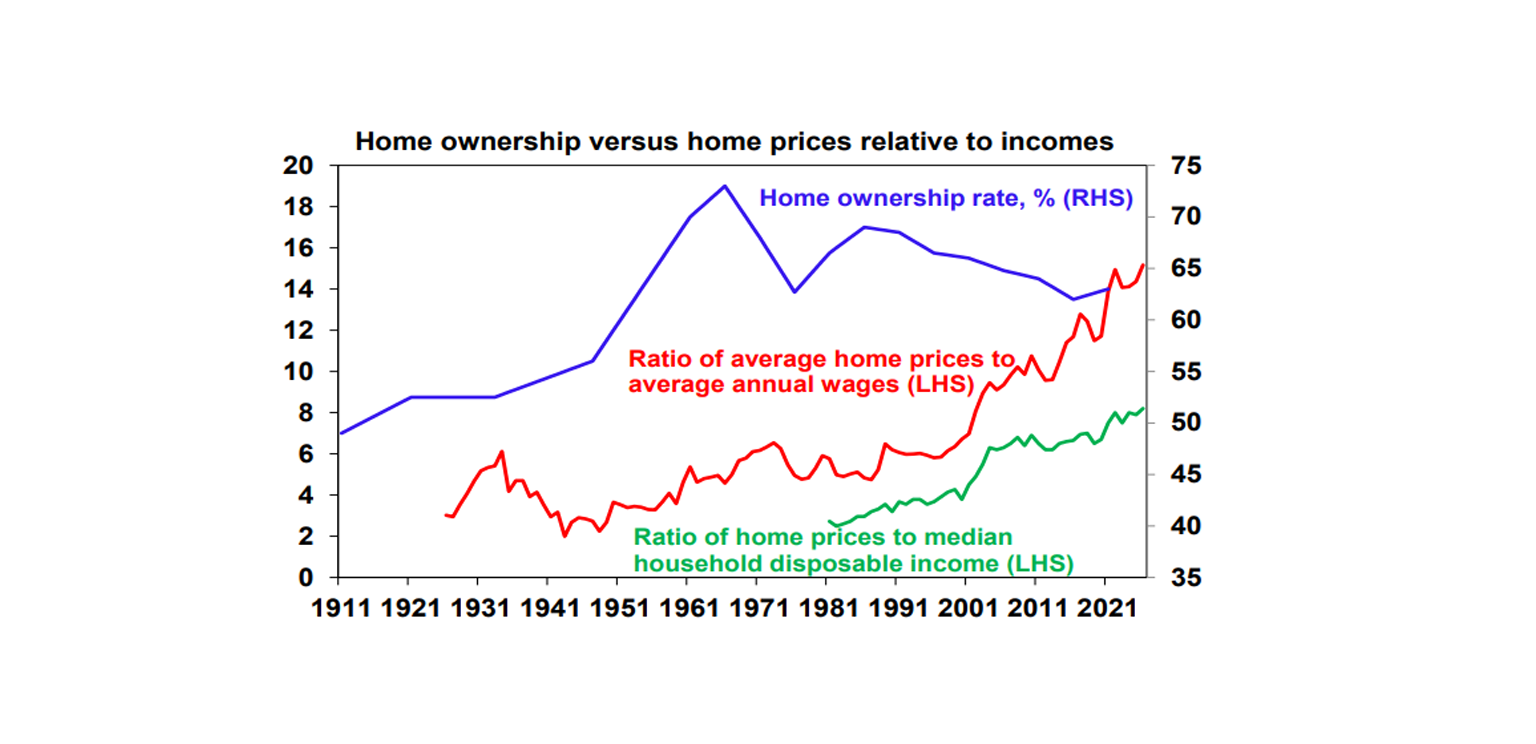
But first a quick recap – how did we get here? After strong gains in home prices over many years, Australian housing is expensive relative to income, rents & its long-term trend and by global standards. Poor affordability is apparent in a surge in the ratio of average dwelling prices to average wages(red line in the next chart) & household income (green line) – both of which have more than doubled since 2000 and with the recent rebound in prices are now at record highs.

Note home ownership data is only available from 5 yearly census. Source ABS, Cotality, AMP

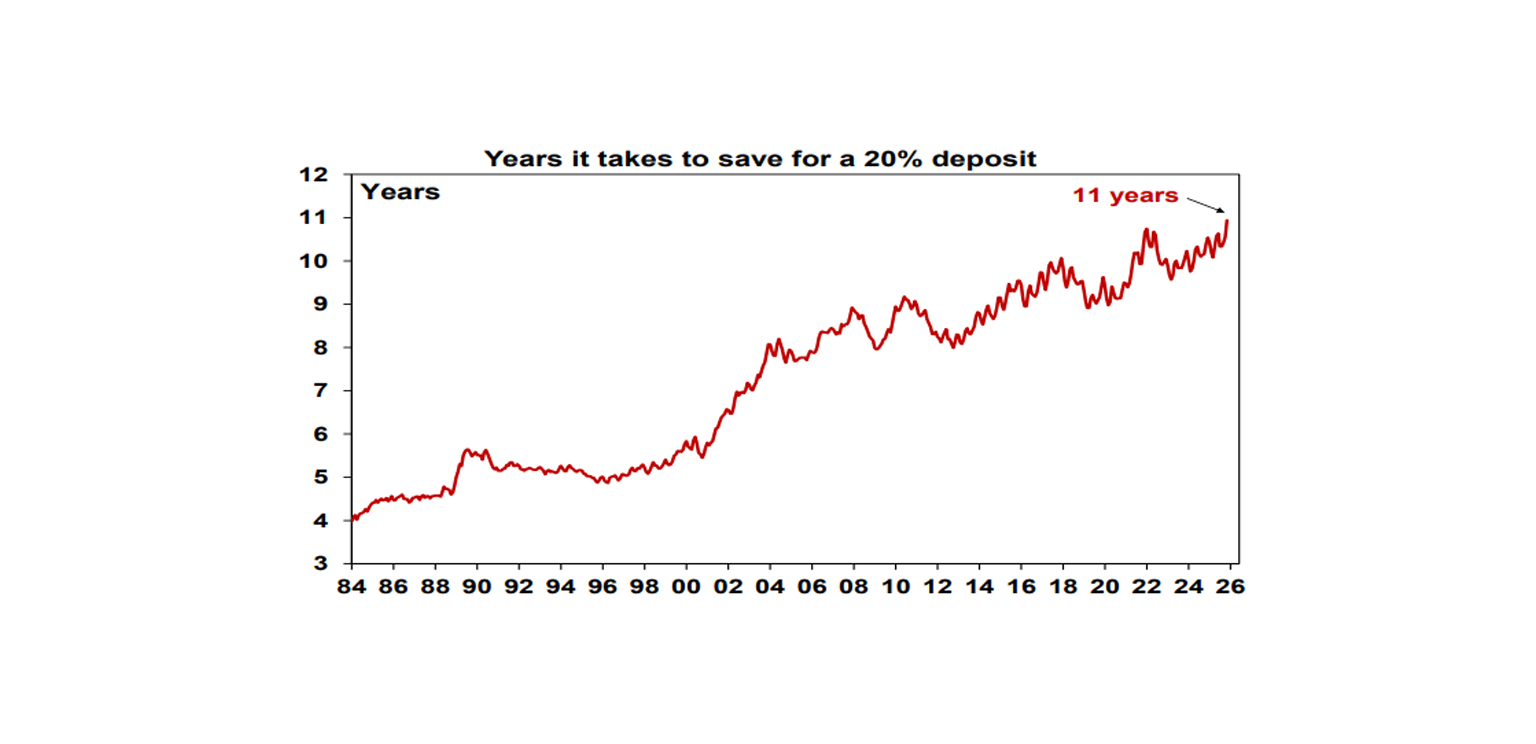
The time taken to save a deposit has also doubled over the last 30 years and is now at a record 11 years. Sure, a first home buyer can now get in with a 5% deposit, but this is with 95% debt! And the deterioration in affordability has contributed to a falling trend in home ownership, along with a range of other factors(see the blue line in the previous chart).

Source: ABS, Cotality, AMP

Key drivers of poor housing affordability

The drivers of poor housing affordability are hotly debated. Many zoom in on things like tax concessions for investors, SMSF buying and foreign demand. But investor and foreign demand were not big drivers of the 20- 30% surge in prices over 2020-22. And property tax concessions are common in other countries, without such poor affordability. Rather the key drivers have been a combination of three things:

  • The downtrend from high interest rates at the start of the 1990s to low rates before and in the pandemic along with the increased availability of debt boosted borrowing ability and hence buyers’ capacity to pay for homes. But this is not the full story as lots of comparable countries have had low interest rates without such expensive housing. And interest rates are well up from their pandemic lows and yet affordability is even worse.
  • Housing supply (for reasons ranging from too much red tape to capacity constraints) has failed to keep up with a surge in demand for housing that started in the mid-2000s with rapid population growth.
  • The concentration of people in just a few coastal cities hasn’t helped.

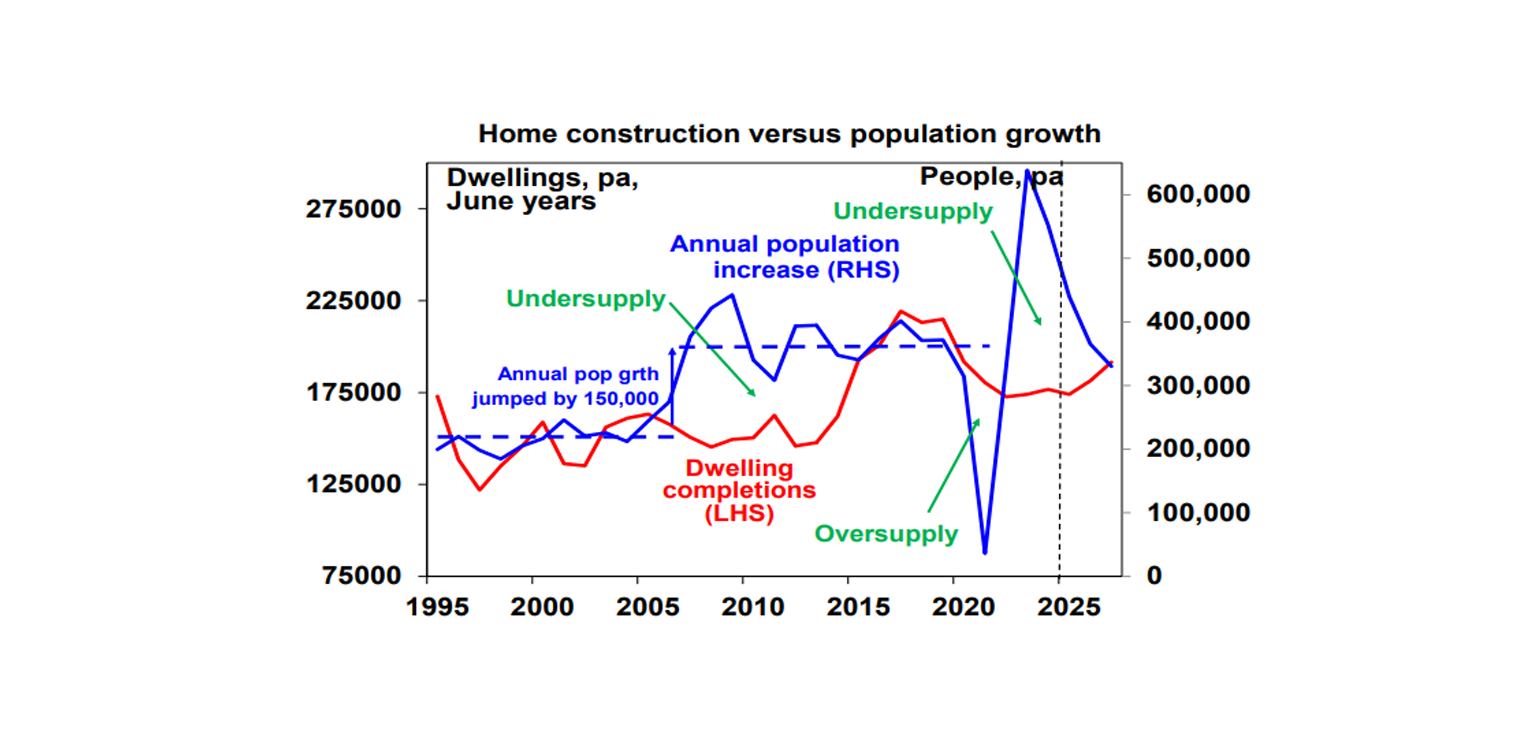
Of these, the fundamental demand/supply mismatch is the critical factor behind poor affordability. This can be demonstrated in the next chart.

Source: ABS, AMP

Starting in the mid-2000s annual population growth jumped by around 150,000 people largely due to a surge in net immigration – see the blue line in the prior chart. This should have been matched by an increase in dwelling completions of around 60,000 homes per annum but there was no such rise until the unit building boom of 2015-20 leading to a chronic undersupply of homes – see the red line. The unit building boom and the slump in population growth through the pandemic helped relieve the imbalance but the unit building boom was brief and a decline in household size from 2021 resulted in demand for an extra 120,000 dwellings on the RBA’s estimates. The rebound in population growth post the pandemic then took property market back into undersupply again.

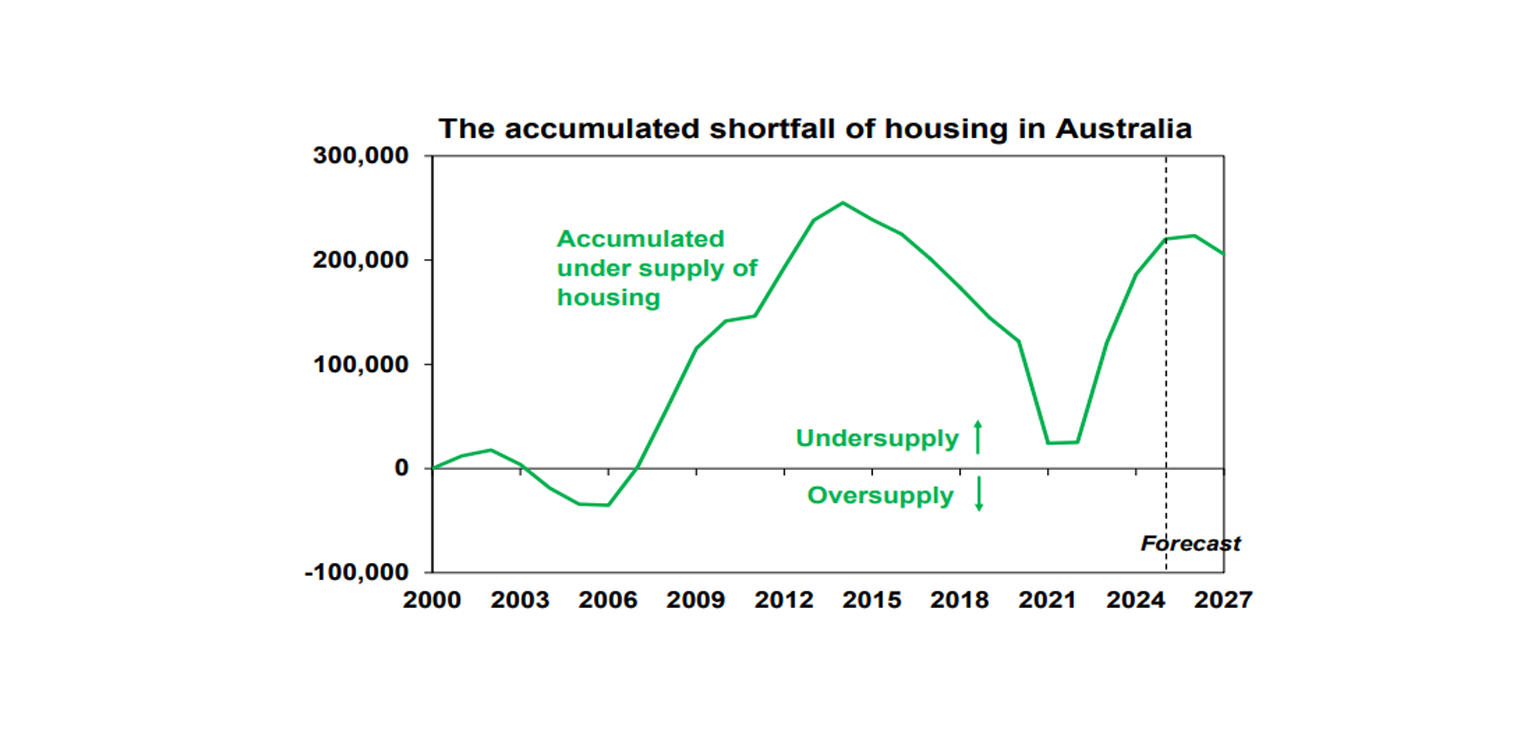
The next chart translates this into an estimate of the cumulative undersupply of dwellings in Australia. Up until 2005 the housing market was in rough balance. It then went into a massive shortfall of about 250,000 dwellings by 2014 as underlying demand surged with booming immigration. This shortfall was then cut into by the 2015-20 unit building boom and the pandemic induced hit to immigration. But it’s since rebounded again to around 220,000 dwellings, or possibly as high as 300,000 if the pandemic induced fall in household size is allowed for. The shortfall is confirmed by low rental vacancy rates.

Source: ABS, AMP

Four key things to improve housing affordability

Very high house prices and associated debt levels relative to wages pose two key problems. First, they pose the risk of financial instability should something make it harder to service loans. Second, the deterioration in affordability is resulting in rising wealth inequality, a deterioration in intergenerational equity, confining more to renting which will exacerbate wealth inequality (renters tend to be less wealthy over their lifetime than homeowners) and it is likely contributing to rising homelessness.

Some might see a house price crash as the solution. Yes, this would improve affordability – but it would likely also come with a deep recession and high unemployment which will make it hard for many to buy a house.

Other policies that won’t work, include: grants & concessions for first home buyers (as they just add to higher prices); abolishing negative gearing (which would just inject another distortion into the tax system and would adversely affect supply), although there is a case to cap excessive use of negative gearing tax benefits; banning foreign purchases altogether (as they are a small part of total demand and may make it even harder to get new unit construction off the ground); and a large scale return to public housing (as a major constraint to more units is excessive costs and delays, and just switching to public housing won’t fix this).

There are no quick fixes, but here are the four key things that need to be done to fix affordability:

  • First, match the level of immigration to the ability of the property market to supply housing and reduce the accumulated housing shortfall of around 200,000-300,000 dwellings. – we have clearly failed to do this since the mid-2000s and particularly following the reopening from the pandemic, and this is evident in the ongoing supply shortfalls. Our rough estimate is that immigration needs to be cut back to around 200,000 a year (see here where we looked at the issue in detail) from 316,000 over the year to the March quarter.
  • Second, build more homes – the commitment by Australian governments to build 1.2 million homes over five years was a welcome move down the path to boost supply. One year into it though and we have only completed 174,000 homes and approvals are only running around 190,000 homes annually, so we are well below the implied 240,000 annual target. To meet the target will require relaxing land use rules, less red and green tape, shifting to faster ways to build including with modular and pre-fab homes, encouraging build to rent affordable housing, training and importing far more tradies and refocussing more on units. In terms of the latter the only time we consistently built more than 200,000 homes per annum was in the unit building boom of the 2015-19 period.
  • Third, decentralisation to regional Australia – this needs appropriate infrastructure and measures to boost regional housing supply.
  • Fourth, some tax reform – including replacing stamp duty with land tax (to make it easier for empty nesters to downsize) and reducing the capital gains tax discount (to remove a pro-speculation distortion).

But don’t throw the baby out with the bathwater

But in seeking to address the problem we need to act in a balanced way. In particular, immigration has been a huge benefit to Australia by boosting labour supply and addressing labour shortages, supporting state and federal budgets, slowing the aging of the population, boosting innovation and enhancing cultural diversity and vibrancy. In particular, via international students who count as immigrants, it helps drive more than $50bn in education export earnings each year, which is our fourth biggest export earner behind iron ore, coal and gas. Ideally, universities should be able to have as many foreign students as they like providing they house them on campus as this would take pressure off existing housing.

Secondly, observing that Australian cities are very low density compared to cities in Europe, Asia and parts of the US (see the next chart) has led some to suggest that the solution to poor affordability lies in densifying our cities. For example, a plan from the Grattan Institute proposed allowing three story units to be built anywhere in Australia’s capital cities. This extreme form of YIMBYism would be a monumental mistake – not only would it push city land values further into the stratosphere exacerbating inequality but it will put the nail in the coffin of the quarter acre block at the centre of the “Aussie dream” epitomised in films like “They’re a Weird Mob” and “The Castle” and the TV show “Neighbours”, which is one of the things that has made Australia great and why people want to come here. Going down the path of even bigger, congested cities seen internationally is not a solution. Which is why allowing more units in Australian cities should be seen as a short-term measure with decentralisation to regional centres being the long-term solution.

Source: Grattan Institute

Share market wobbles – what are the negatives and positives?

By Dr Shane Oliver – Head of Investment Strategy and Economics and Chief Economist, AMP Capital | 18 Nov 2025

Key points

  • Rich valuations, AI bubble worries and uncertainty about central bank rate cuts are the main negatives for shares at present and could see recent falls extend further.
  • Against this though, global profit growth remains strong and there is no sign of recession suggesting that the broad trend in shares may remain up.
  • For investors and super fund members, the danger in trying to time corrections and bear markets is that you miss out on longer-term gains. The key is to adopt an appropriate long-term investment strategy and stick to it.

Introduction

November so far has seen a pretty wobbly ride for shares. From their October highs, US shares are down 3.2% and Australian shares are down 5%. More significantly perhaps concerns about a bubble in equity markets focused around AI have escalated since we had a look at the issue early last month (see here) with more high profile commentators and investment experts expressing concern. And share markets have not been helped by a scaling back in expectations for near term rate cuts in the US and uncertainty about whether there will be further rate cuts at all in Australia. This note looks at the key negatives and positives for shares.

The negatives for shares

Several negatives hang over shares.

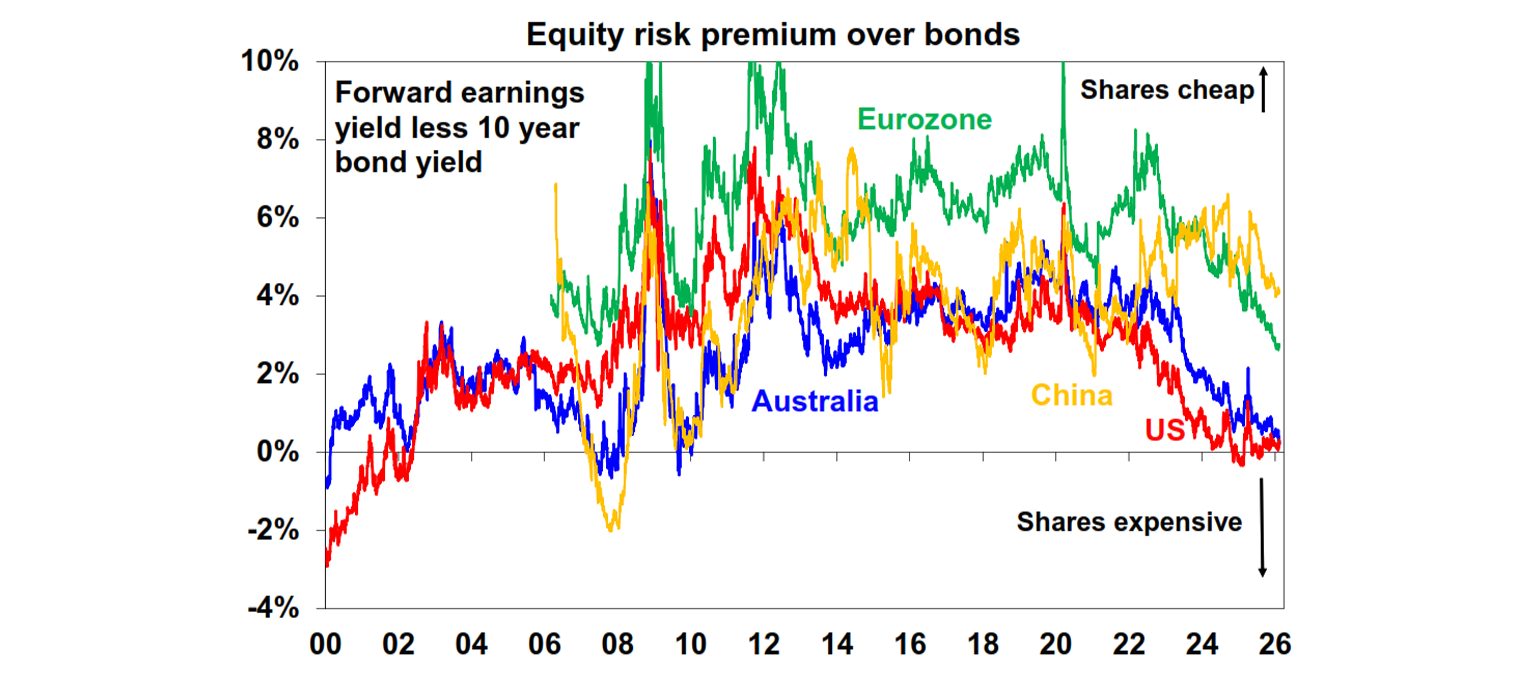
  • First, shares are expensive. This is nothing new but is clearly evident in relatively high price to earnings multiples. The forward price to earnings ratio on US shares is at 23.5 times, not far below the 1999-2000 tech boom high. The PE on Australian shares is well above its tech boom high despite a recent fall. Related to this, the risk premium offered by shares over bonds – the gap between the forward earnings yield and the 10-year bond yield – is very low in the US and Australia versus the post-GFC period.

Source: Bloomberg, AMP

It should be noted that thanks to lower bond yields the equity risk premium now is more attractive than it was prior to the 1987 crash or the tech wreck. And valuations are a poor guide to timing market movements. That said, high PEs and the low equity risk premium compared to much of the last twenty years warn of a slower return potential ahead and provide less of a buffer should things go wrong.

  • Second, shares have had several years of strong gains, with the last bear market in global shares being in 2022. Shares did have sharp falls into April this year on Trump’s tariffs, but the falls were less than 20% and were quickly reversed. Over the last 3 years US shares have returned 23%pa, global shares 21%pa and Australian shares 13%pa. History warns that after a run of strong above average years a weaker year and often a bear market can come along.
  • Third, there are signs of a bubble forming in AI shares with investor enthusiasm for AI related exposure. We covered this in the note last month referred to earlier. Specifically, the Magnificent Seven (Apple, Microsoft, Alphabet, Amazon, Nvidia, Meta and Tesla) have risen more than 30-fold over the last decade dwarfing various other bubbles and they have disproportionately driven the US share market accounting for 50% or more of its gains since 2023.

Source: Bloomberg, AMP

  • Fourth, there has been increasing uncertainty around how much central banks will cut interest rates – notably in the US and Australia – and this has been a key driver of weakness in shares since their October highs. The US money market now sees only around a 45% chance of a December rate cut. This is raising concern on several fronts as US jobs data has shown signs of weakening lately and less rate cuts may mean higher bond yields which in turn pressures share market valuations. In Australia, higher than expected September quarter inflation and associated worries about capacity constraints have seen the RBA adopt a more cautious data dependent approach with the money market seeing just a 40% chance of another rate cut.
  • Fifth, there remains immense uncertainty around the lagged economic impact on US economic growth of Trump’s tariffs.
  • Finally, there remain concerns about excessive public debt levels in several countries including the US and ongoing geopolitical risks.

The positives

Against this backdrop, a number of positives provide some offset.

  • First, profit growth in the key direction setting US share market remains strong. The September quarter earnings reporting season has seen 82% of results beat expectations which is above the norm of 76% and profit growth is on track for around 15.5%yoy. Tech profits are running around 28%yoy, which contrasts with the “dot.com” stocks in the late 1990s tech boom which were making little in the way of profits. September quarter profits have generally surprised on the upside globally as well.

Source: Bloomberg, UBS, AMP

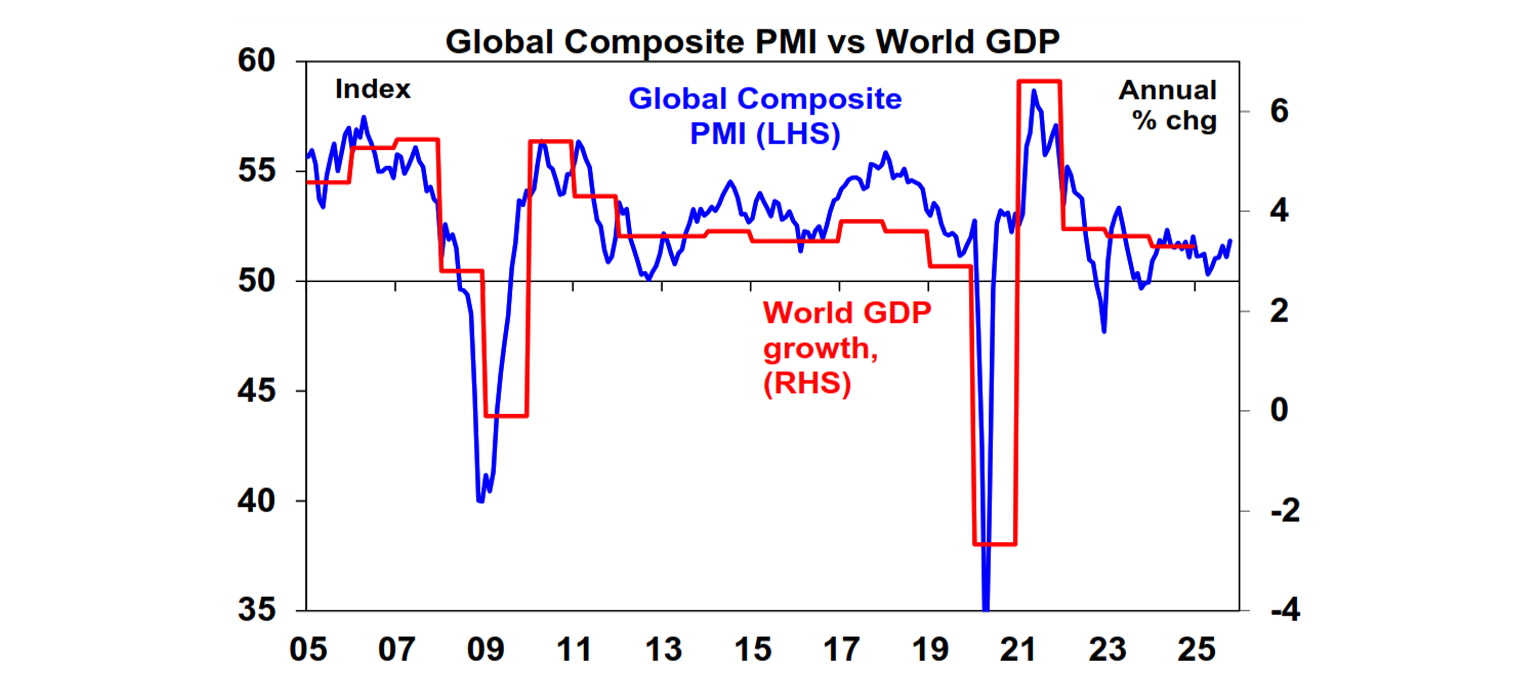
  • Related to this, business conditions PMIs – derived from business surveys – are at levels consistent with reasonable economic growth. And Australian economic growth is gradually improving which should lead to stronger ASX listed company profits next year. So, there is no sign of recession which is important because major bear markets in shares tend to be associated with recession – although this is no guarantee as shares often lead the way.

Source: Bloomberg, AMP

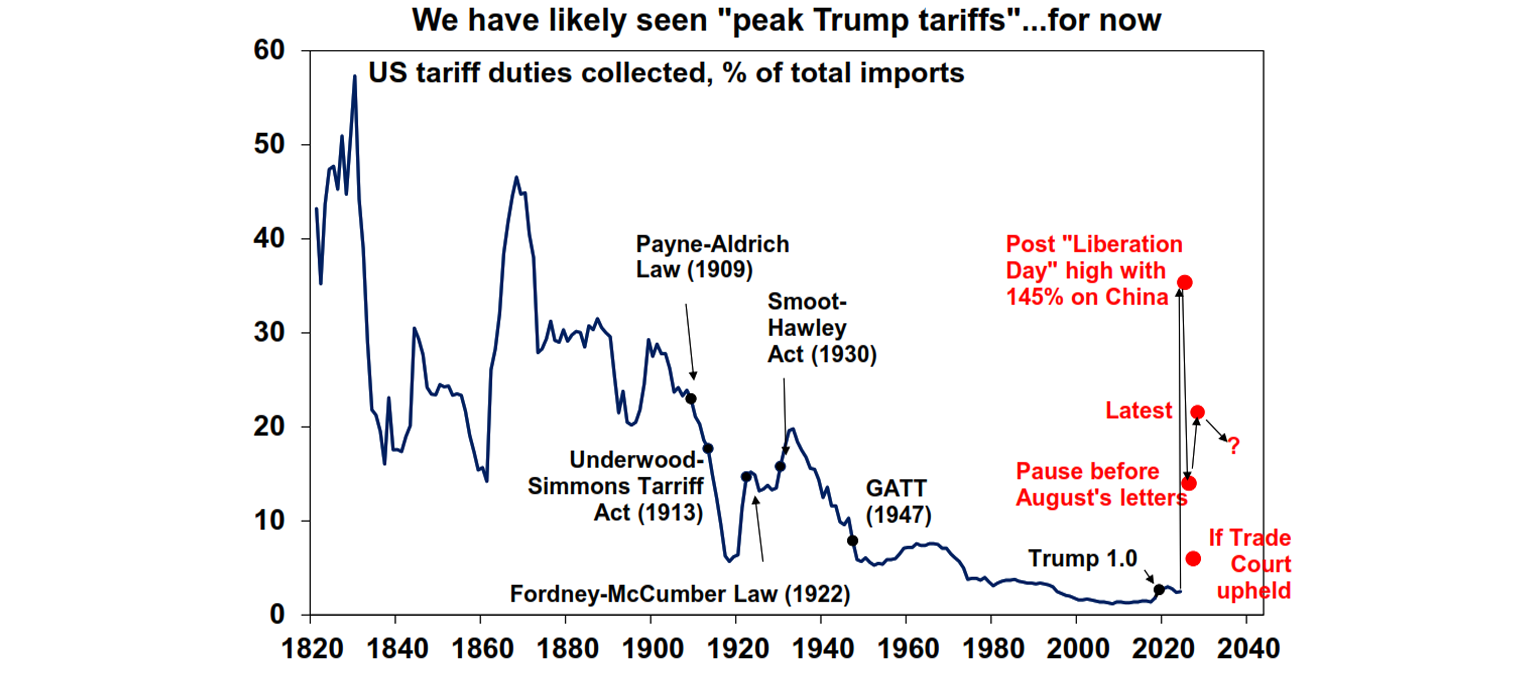
  • Third, Trump is now cutting tariffs as next year’s mid-term elections come into focus. Trump won the 2024 election largely on the back of dissatisfaction with “cost of living” increases, but recent Democrat election victories confirm that swing voters are now deserting him because he has added to the cost of living. To avoid a disaster in next year’s mid-terms he is swinging back to measures to reduce the cost of living. This was already evident in his acceptance of the latest trade truce with China which saw both sides removing imposts and threats on each other with no resolution to the key issues. But it signalled that we are well passed “peak Trump tariffs” with Trump having little choice but to back down with China as he couldn’t afford another escalation in his politically unpopular tariffs. His pivot was also evident in his talk of tariff rebates and floating the silly idea of a 50-year mortgage. But after the Democrat victories early this month the pivot is in full swing with tariff exemptions on imports of food items – like beef, tomatoes, bananas, oranges, fruit juices, nuts and coffee. This means removing tariffs that were only imposed earlier this year. So much for his argument that foreigners pay tariffs and there is no impact on prices for Americans! And his chopping and changing won’t do anything for businesses trying to work out where best to locate production – but that’s a separate issue. The key is that Trump is pivoting to more market and consumer friendly policies.
  • Fourth, measures of investor sentiment are still not showing the euphoria often associated with major market tops and bubbles don’t normally burst when there is so much talk about them.
  • Fifth, while there is much uncertainty about how much further interest rates will fall our view remains that both the Fed and RBA will cut rates further. We are allowing for three more US rate cuts and one more RBA rate cut, albeit not till around May next year.
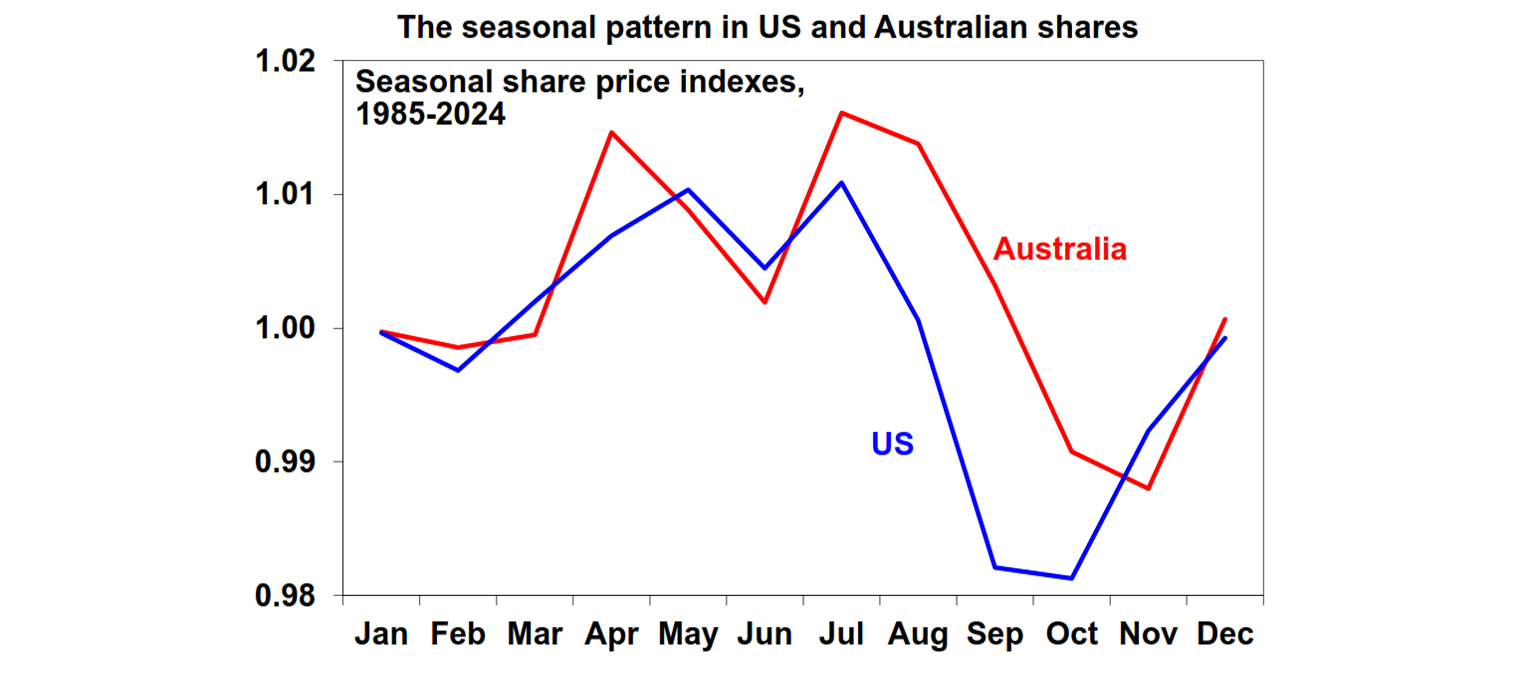
  • Finally, we are now entering a positive period of the year for shares from a seasonal perspective. Shares typically rally from November into the new year as part of the Santa rally.

Source: Bloomberg, AMP

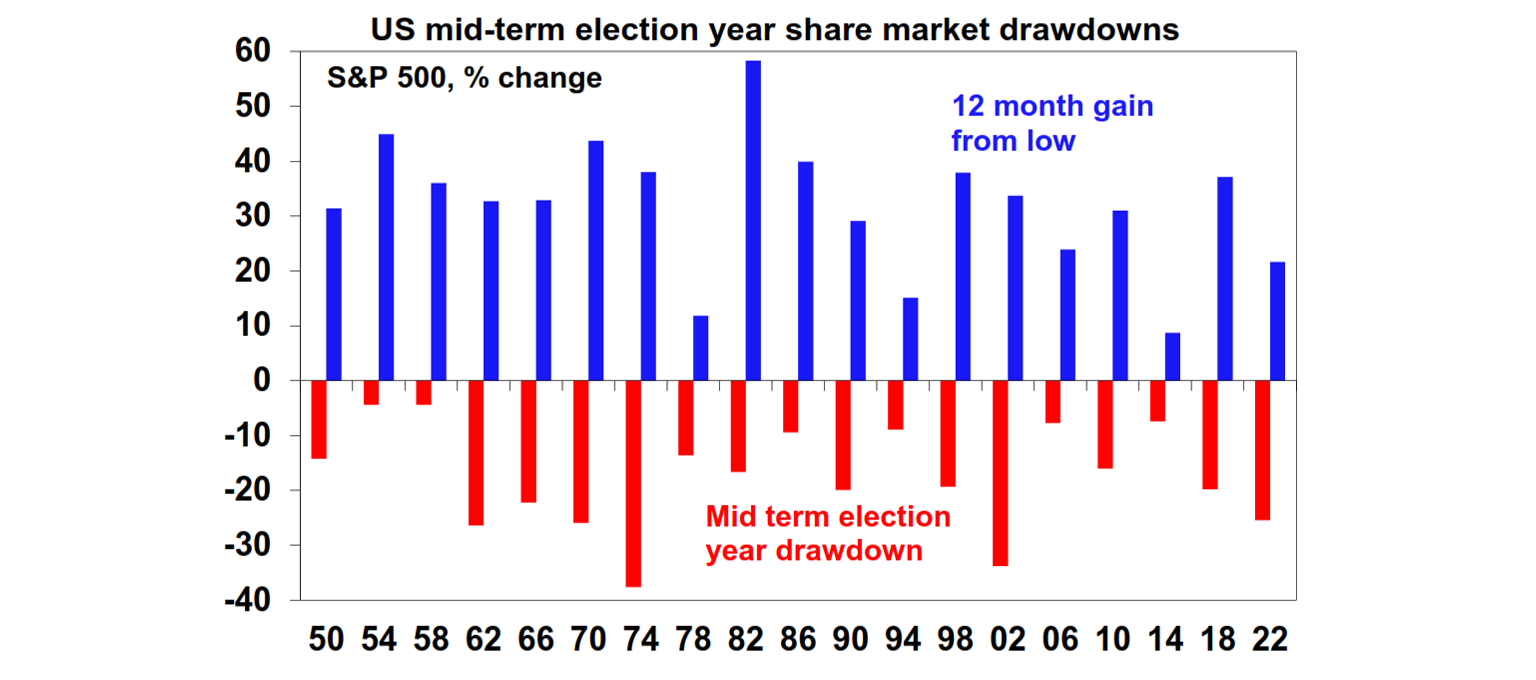
So, while the risk of a further near-term pullback in shares is high, a more severe fall may not come till next year. And in the meantime, still strong global profit growth, little indication of a recession and the likelihood that central banks will still cut rates further suggest the broad trend in shares may still remain up. However, 2026 could be a rougher year as it’s another mid-term election year in the US. Since 1950 US shares have had an average top to bottom drawdown of 17% in mid-term election years.

Implications for investors

The bottom line is that stretched share market valuations are warning of the risk of a further fall in share markets and it’s possible that AI enthusiasm has run ahead of itself. But stretched valuations are a poor timing tool for market movements. As we saw in the 1990s any bubble could inflate further, well beyond when commentators and experts start to worry about it. Either way, rough periods are an inevitable part of share market investing but trying to time them is hard, so the key is to adopt an appropriate long term investment strategy and stick to it.

Bubble trouble – is AI enthusiasm driving a bubble in shares?

By Dr Shane Oliver – Head of Investment Strategy and Economics and Chief Economist, AMP Capital | 8 Oct 2025

Key points

  • Rich share market valuations are warning of the risk of a pullback in shares amidst fears of a bubble and it’s possible that enthusiasm for AI has run ahead of itself. But the fundamentals behind this are arguably far stronger than they were at the time of the late 1990s tech boom.
  • For investors and super fund members, the danger in trying to time corrections and bear markets is that you miss out on longer-term gains. The key is to adopt an appropriate long-term investment strategy and stick to it.

Introduction

Lately, some commentators and investment experts have been expressing concern about a bubble in equity markets with some referring to excessive optimism about AI and drawing comparisons to the late 1990s tech boom. Some have been advocating holding a higher proportion of funds in cash in response. This note looks at the key issues and what it means for investors. As the concerns centre on the direction-setting US share market, we will focus mainly on that, as any fall there will impact Australian shares.

Why the bubble worries?

The concerns about a bubble reflect a combination of factors:

  • First, shares have been enjoying very strong gains led by the US with most at or around record levels. The US share market is up 35% from its April US tariffs driven low & has returned 25%pa over the last 3 years with global shares returning 23%pa and Australian shares 15%.
  • Second, valuations are stretched with the forward price to earnings ratio on US shares at 23.6 times, not far below the 1999-2000 tech boom high of 26 times. The PE on Australian shares is well above its tech boom high. Note PEs were above current levels in late 2020/early 2021 due to distortions caused by the pandemic.

Source: Bloomberg, AMP

Related to this, the risk premium offered by shares over bonds – the gap between the forward earnings yield (inverse of the forward PE) and the 10-year bond yield – is very low in the US and Australia.

  • Third, the US share market has been disproportionately driven by a group of tech stocks. For example, the Magnificent Seven stocks (Apple, Microsoft, Alphabet, Amazon, Nvidia, Meta and Tesla) have been accounting for 50% or more of the gains in the S&P 500 since 2023 despite being about one third of market capitalisation. This arguably leaves US shares very vulnerable to the performance of this narrow group of tech/AI focussed companies.
  • Fourth, this narrow group of stocks have surged in value over the last decade initially reflecting FAANG (Facebook, Apple, Amazon, Netflix & Google) enthusiasm that has morphed into AI enthusiasm since Chat GPT was released in 2022. As can be seen in the next chart the Magnificent Seven group of stocks have risen more than 30-fold since 2015 dwarfing various other “bubbles” over the last decade including the tenfold rise in the tech heavy Nasdaq into 2000.

Source: Bloomberg, AMP

  • Fifth, while there is a high level of corporate interest and investment in AI, evidence that they are reaping a benefit is mixed with many projects at the pilot stage with issues around data, culture, leadership and skills. In other words, AI hype may have run ahead of the reality.
  • Sixth, speculative assets like gold and bitcoin have also been strong, suggesting speculative attitudes may be starting to take hold.
  • Finally, share markets appear to be disconnecting from a long worry list that includes: uncertainty around US tariffs and their impact; the slowing US jobs market; messy US economic policies and the latest shutdown; uncertainty as to whether the Fed will cut rates as much as the 4-5 cuts the US market is expecting; concern about public debt sustainability in the US, France, UK and Japan; & elevated geopolitical risks particularly with escalating tensions between Russia and NATO and the risk of secondary tariffs on countries importing Russian oil.

But could this time be different?

Over the years I have seen numerous bubble calls only for the market to keep going up or see nothing more than a brief correction. There are several arguments against the bubble call making it all a shade of grey:

  • First, while the risk premium offered by shares is low, bond yields today are much lower than when the tech boom peaked in early 2000 when they were over 6%, so the equity risk premium is at least better than it was back then particularly in the US.

Source: Bloomberg, AMP

  • Second, while the chart above showing a comparison of “bubbles” highlights the extreme gains in the Magnificent Seven it probably exaggerates the case for a bubble. It shows gains much bigger than the tech heavy Nasdaq going into 2000, but this time around Nasdaq has not gone up anywhere near as quickly. There is a danger in focussing on a select group of stocks – just as there was last decade when the FAANG stocks were said to be in a bubble. Perhaps the comparison should be the “dot com” stocks of the late 1990s.
  • But here there is a notable difference. Dot com stocks were making little in the way of profits, but Magnificent Seven stocks are making huge profits as a group with very strong profit growth, running around 30%yoy. Profit growth for US tech companies generally is around 17%yoy. More broadly US company profit growth has continued to surprise on the upside and is likely to have been around 11.5%yoy in the September quarter.
  • Fourth, while initial results on the benefits of corporate investment in AI are mixed, it was inevitable that this will take time, but anyone who has used AI tools can see the huge benefit they offer in doing things faster (like doing the research for these notes!) and boosting productivity. Related to this AI systems, or specifically large language models, are very data and computationally intensive and will require a significant build out of data centres which in turn will mean high levels of business investment and demand for raw materials like copper.
  • Fifth, while global business conditions PMIs – i.e. surveys of how businesses are faring – have slowed they are still at levels consistent with reasonable economic growth. In other words, there is no sign of recession which is important because major bear markets in shares tend to be associated with recession – although this is no guarantee as share markets often lead the way.

Source: Bloomberg, AMP

  • Sixth, measures of US investor sentiment show optimism, but they are arguably not yet indicative of euphoria towards shares that may be associated with a major share market top. See the next chart.

The Investor Sentiment index is based on a composite of surveys of investors and investment advisers and options positioning. Source: Bloomberg, AMP

Related to this, bubbles don’t normally see lots of people doing bubble searches online so the surge in Google searches for an “AI bubble” since June may be a positive sign from a contrarian perspective, i.e. that we are not in a bubble yet.

Source: Source: Google, AMP

  • Finally, while there is no doubt a speculative element in investor demand for gold and bitcoin pushing their prices up, their surge partly owes to demand for a hedge against feared unsustainable public debt levels, worries that this might be monetised (i.e. where governments allow higher inflation to reduce the real value of debt) and geopolitical threats. So, record high levels of both are not necessarily a sign of a broader speculative mania.

Implications for investors

What are investors to make of all of this? There are four key points.

  • Rough periods – corrections and sharp bear markets – are normal in share markets and are the price we pay for the higher returns compared to defensive assets they provide over the long term.
  • Rich share market valuations are warning of the risk of a pull back in shares and it’s possible that enthusiasm for AI has run ahead of itself. But the fundamentals behind this are arguably far stronger than they were at the time of the late 1990s tech boom.
  • Either way it’s very hard to time share market moves. There were warnings of “irrational exuberance” in US shares in 1995, and it went on for another five years. The danger in trying to time corrections and bear markets is that you miss out on the longer-term gains.
  • The key is to adopt a long-term investment strategy appropriate for your risk tolerance, financial situation and age and stick to it.

Why I still love dividends and you should love them too

By Dr Shane Oliver – Head of Investment Strategy and Economics and Chief Economist, AMP Capital | 4 Mar 2019

Key points

  • Dividends are great for investors. They augur well for earnings growth, provide a degree of security in uncertain times, are likely to comprise a relatively high proportion of returns going forward and provide a relatively stable source of income.
  • Including reinvested dividends, the Australian share market has surpassed its 2007 record high.
  • It’s important that dividend imputation is not weakened in Australia to ensure dividends are not taxed twice.

Introduction

Prior to the 1960s most share investors were long-term investors who bought stocks for their dividend income. Investors then started to focus more on capital growth as bond yields rose relative to dividend yields on the back of rising inflation. However, thanks to an increased focus on investment income as baby boomers retire, interest in dividends has returned. This is a good thing because dividends are good for investors in more ways than just the income they provide.

Australian companies pay out a high proportion of earnings as dividends. This is currently around 65% compared to around 45% for global shares. However, some argue that dividends don’t matter – as investors should be indifferent as to whether a company pays a dividend or retains earnings that are reinvested to drive growth. Or worse still, some argue that high dividend pay outs are a sign of poor long-term growth prospects, that they are distraction from business investment or that they are often not sustainable. And of course, some just see dividends as boring relative to speculating on moves in share values. My assessment is far more favourable.

Seven reasons why dividends are cool

First, dividends do matter in terms of returns from shares. For the US share market, it has been found that higher dividend payouts lead to higher earnings growth1. This is illustrated in the next chart, which shows that for the period since 1946 when US companies paid out a high proportion of earnings as dividends (the horizontal axis) this has tended to be associated with higher growth in profits (after inflation) over the subsequent 10 years (vertical axis). And higher profit growth drives higher returns from shares. So dividends do matter and the higher the better (within reason). There are several reasons why this is the case: when companies retain a high proportion of earnings there is a tendency for poor hubris driven investments; high dividend payouts are indicative of corporate confidence about future earnings; and high payouts indicate earnings are real.

Source: Global Financial Data, Thomson Reuters, AMP Capital

Second, dividends provide a stable contribution to the total return from shares, compared to the year-to-year volatility in capital gains. Of the 11.7% pa total return from Australian shares since 1900, just over half has been from dividends.

Source: Global Financial Data, AMP Capital Investors

Third, the flow of dividend income from a well-diversified pool of companies is relatively smooth. As can be seen below, dividends move in line with earnings but are smoother.

Source: Thomson Reuters, RBA, AMP Capital

Companies like to manage dividend expectations smoothly. They rarely raise the level of dividends if they think it will be unsustainable. Sure, some companies do cut their dividends at times, but the key is to have a well-diversified portfolio of sustainable and decent dividend paying shares.

Fourth, investor demand for stocks paying decent dividends will be supported as the ranks of retirees swell.

Fifth, with the scope for capital growth from shares diminished thanks to relatively high price to earnings ratios compared to say 40 years ago, dividends will comprise a much higher proportion of total equity returns. More than half of the total medium-term return from Australian shares is likely to come from dividends, once allowance is made for franking credits.

Sixth, dividends provide good income. Grossed up for franking credits the annual income flow from dividends on Australian shares is around 5.7%. That’s $5700 a year on a $100,000 investment in shares compared to $2150 a year in term deposits (assuming a term deposit rate of 2.15%).

Source: Bloomberg, RBA, AMP Capital

Finally, while Australian shares are still 10% below their 2007 high, once reinvested dividends are allowed for (ie looking at the ASX 200 accumulation index) the market is well above it.

Source: Bloomberg, AMP Capital

Another way to look at dividend income

How powerful investing for dividend income can be relative to investing for income from interest is illustrated in the next chart. It compares initial $100,000 investments in Australian shares and one-year term deposits in December 1979.

Source: RBA, Bloomberg, AMP Capital

The term deposit would still be worth $100,000 (red line) and last year would have paid $2,200 in interest (red bars). By contrast the $100,000 invested in shares would have grown to $1,111,435 as at December last year (blue line) and would have paid $47,792 in dividends last year (blue bars). Or around $62,240 if franking credits are allowed for. Over time an investment in shares can rise but a term deposit is fixed.

But don’t dividends crimp capex?

This issue has been wheeled out repeatedly since the GFC. But it’s ridiculous. First the rise in dividends this decade has mainly come from cashed up miners and it’s hard to argue they should invest more after the mining investment boom. Second the dividend payout ratio is not high historically. Third the reasons for poor business investment lie in: business sector caution after the GFC & the rise in the $A above parity, which squeezed competitiveness; the fall back to more normal levels in mining investment; and the shift to a capital lite economy based around IT and services. Don’t blame dividends for poor capex.

Source: Thomson Reuters, RBA, AMP Capital

Why dividend imputation is so important

Dividend imputation was introduced in the 1980s and allows Australians to claim a credit against their tax liability for tax already paid on their dividends in the hands of companies as profits and boosts the effective dividend yield on Australian shares by around 1.3 percentage points. However, over the years it has been subject to claims that it creates a bias to invest in domestic equities, that it biases companies to pay dividends and not invest and that it benefits the rich. This is all nonsensical as dividend imputation simply corrects a bias by removing the double taxation of company earnings – once in the hands of companies and again in the hands of investors. The removal of dividend imputation would not only reintroduce a bias against equities but would also substantially cut into the retirement savings and income of Australians, discourage savings and lead to lower returns from Australian shares.

Labor’s proposal to make franking credits in excess of a taxpayer’s tax liability non-refundable could be argued to remove an anomaly in the tax system as dividend imputation was designed to prevent the double taxation of dividends, not to stop them being taxed at all. But a problem is that many Australians have planned their retirement around receiving such refunds. This is a subject for another note. But it is worth noting that Labor’s proposal does not affect at least 92% of taxpayers who will continue receiving franking credits as they have a sufficient income tax liability (as will pensioners who will be exempted). If it sets off a broader wind back of franking credits, then it would be a bigger concern.

Concluding comments

Dividends provide a great contribution to returns, a degree of protection during bear markets and a great income flow. For investors needing income the trick is to have a well-diversified portfolio of companies paying high sustainable dividends.
The Aussie economy in 2019; it’s not boom but it’s not doom either

By Dr Shane Oliver

Head of Investment Strategy and Economics and Chief Economist, AMP Capital

Investors might be confused about the mixed news coming out late last year for the Australian economy and what it means for returns and rates.

Economic growth has been okay, and unemployment has fallen to five per cent which is quite low by Australian standards. But we’re also seeing ongoing weakness in house prices. Some say house price falls could be worse that those seen during the global financial crisis, and, ultimately, I think they will be.

So what’s going on here?

How we avoided recession

Basically, we’re seeing ‘desynchronisation’ across key sectors in the Australian economy – that is, when one part of the economy weakens, another picks up.

Desynchronisation partly explains why the Australian economy has dodged recession for almost 28 years.

We enjoyed a mining boom. When that came to an end, the mining-exposed parts of the economy, notably Western Australia, suffered. But that enabled lower interest rates and a lower Australian dollar which helped stimulate the economy. The housing market also strengthened and we had a housing boom in Sydney and Melbourne.

A new rotation

The economy is now rotating again, creating another two-speed economy.

On the positive side, we’re getting close to the end of the mining investment slump, which is taking pressure off Western Australia, the Northern Territory and parts of Queensland. We’re also seeing good signs in terms of non-mining investment and export values are doing ok.

But on the negative side, the housing boom is coming to an end and the key drivers for weaker housing returns remain in place:

  • Credit tightening
  • Rising supply in the unit market
  • Reduced foreign buyer demand
  • A lot of investors having to switch from interest-only loans to principle and interest loans.
  • Uncertainty about changes to taxation concessions around negative gearing and capital gains tax should Labor win the upcoming federal election

Also evident is a psychological change in attitudes to the housing market from ‘I’ve got to get in now otherwise I’ll miss out’ – (fear or missing out or FOMO); to ‘if I don’t get out now, I’ll be in trouble’ – (Fear of not getting out or FONGO).

So we’re likely to see more weakness in house prices as we go through 2019, particularly in Sydney and Melbourne where prices could come off another 10 per cent or so, probably more in Melbourne which has lagged a little bit going into this downturn.

That would take top to bottom falls in Sydney and Melbourne to around 20 per cent (10 per cent in 2019). Other parts of Australia will hold up a bit better, with the national average prices having top to bottom fall of around 10 per cent.

That’s going to cause a degree of weakness in terms of consumer spending in Australia because we will get a negative wealth effect flowing through. (When house prices fall, Australians are likely to feel less wealthy and trim consumption). That will also be a bit of a constraint for the banks.

Rate cut risk

When we put all this together, it’s going to mean an ongoing environment where wages growth remains low and inflation remains low, and so we’re unlikely to see the Reserve Bank raise interest rates in 2019.

In fact, the likelihood is that the Reserve Bank ends up cutting interest rates in 2019. If they do that as we expect, it could well be a second half 2019 story because it will take them a while to come around to the view rates need to be cut.

It’s a close call, but we think rates will be cut in 2019 and that there will be no rise.

Avoiding recession

Despite the negatives, when I look at the Australian economy, I don’t see a recession.
There are areas of the economy which are quite strong, and which will keep growth going to counter the other areas which will constrain it.

This year we’re probably looking at overall economic growth of around 2.5 to 3 per cent; we’re looking at unemployment going sideways – it may come down a little bit, but nothing to get excited about; and we’re looking at ongoing weak wages growth and low inflation.

What this means for investors

This outlook above has a number of implications for investors, including:

  • Returns from bank deposits will remain poor,
  • With a rate cut likely in Australia and further rate rises likely in the US, albeit at a slower rate, the Australian dollar is likely to fall into the high $US0.60s,
  • Australian bonds are likely to outperform global bonds,
  • Australian shares will remain great for income, but global shares will deliver better capital growth, and
  • The housing downturn will hit retailers, retail property, banks and building material stocks.

About Tailored Lifetime Solutions:

At Tailored Lifetime Solutions we pride ourselves on staying true to our core values of:

  • Genuine Care
  • Keeping it simple and
  • Providing Security and Peace of Mind.

Tailored Lifetime Solutions has been helping Australians secure their Financial future for over 18 years. We understand each of our clients is unique and as such require tailored financial advice to meet their needs. We work to partner our clients on their financial journey, to ensure financial fitness throughout life’s various stages and secure your future financial security.

With over 70 years of financial planning experience between us, our areas of advice include:

  • Wealth creation
  • Lending and mortgage broking
  • Superannuation advice
  • Self managed superannuation funds
  • Aged Care advice
  • Lifestyle financial planning

Providing quality financial advice in the Eastern Suburbs for almost 20 years.

Important information

This information is general information only and hasn’t taken your circumstances into account. It’s important to consider your particular circumstances before deciding what’s right for you. Read our Financial Services Guide for information about our services, including the fees and other benefits that AMP companies and their representatives may receive in relation to products and services provided to you.

Although the information is from sources considered reliable, AMP does not guarantee that it is accurate or complete. You should not rely upon it and should seek qualified advice before making any financial decision. Except where liability under any statute cannot be excluded, AMP does not accept any liability (whether under contract, tort or otherwise) for any resulting loss or damage of the reader or any other person.

13 common sense tips to help manage your finances


Introduction

A few months ago Reserve Bank Governor Phillip Lowe provided four common sense points we should all keep in mind regarding borrowing to finance a home. (The Governor’s speech can be found here). I thought they made sense and so summarised them in a tweet to which someone replied that every checkout operator knows them. Which got me thinking that maybe many do know them, but a lot don’t, otherwise Australians would never have trouble with their finances. So I thought it would be useful to expand Governor Lowe’s list to cover broader financing and investment decisions we make. I have deliberately kept it simple and in many cases this draws on personal experience. I won’t tell you to have a budget though because that’s like telling you to suck eggs.

1. Shop around

We often shop around to get the best deal when it comes to consumer items but the same should apply to financial services. As Governor Lowe points out “don’t be shy to ask for a better deal whether for your mortgage, your electricity contract or your phone plan”. The same applies to your insurance, banking, superannuation, etc. It’s a highly-competitive world out there and financial companies want to get and keep your business. So when getting a new financial service it makes sense to look around. And when it comes time to renew a service – say your home and contents insurance – and you find that the annual charge has gone up way in excess of inflation (which is currently around 2%) it makes sense to call your provider to ask what gives. I have often done this to then be offered a better deal on the grounds that I am a long-term loyal customer.

2. Don’t take on too much debt

Debt is great, up too a point. It helps you have today what you would otherwise have to wait till tomorrow for. It enables you to spread the costs associated with long term “assets” like a home over the years you get the benefit of it and it enables you to enhance your underlying investment returns. But as with everything you can have too much of it. Someone wise once said “it’s not what you own that will send you bust but what you owe.” So always make sure that you don’t take on so much debt that it may force you to sell all your investments just at the time you should be adding to them or worse still potentially send you bust. Or to sell your house when it has fallen in value. A rough guide may be that when debt servicing costs exceed 30% of your income then maybe you have too much debt – but it depends on your income and expenses. A higher income person could manage a higher debt servicing to income ratio simply because living expenses take up less of their income.

3. Allow that interest rates can go up as well as down

Yeah, I know that it’s a long time since offical interest rates were last raised in Australia – in fact it was way back in 2010. So as Governor Lowe observes “many borrowers have never experienced a rise in official interest rates”. But don’t be fooled by the recent history of falling or low rates. My view is that an increase in rates is still a long way off (and they may even fall further first) – but that’s just a view and views can be wrong. History tells us that eventually the interest rate cycle will turn up. Just look at the US where after six years of near zero interest rates, official US interest rates have risen 2% over the last three years. So, the key is to make sure you can afford higher interest payments at some point. And when official rates move up the moves tend to be a lot larger than the small out of cycle moves from banks that have caused much angst lately.

4. Allow for rainy days

This is another one raised by Governor Lowe who said: “things don’t always turn out as we expect. So for most of us having a buffer against the unexpected makes a lot of sense.” The rainy day could come as a result of higher interest rates, job loss or an unexpected expense. This basically means not taking all the debt offered to you, trying to stay ahead of your payments and making sure that when you draw down your loan you can withstand at least a 2% rise in interest rates.

5. Credit cards are great, but they deserve respect

I love my credit cards. They provide me with free credit for up to around 6-7 weeks and they attract points that can really mount up (just convert the points into gift cards and they make optimal Christmas presents!). So, it makes sense to put as much of my expenses as I can on them. But they charge usurious interest rates of around 20-21% if I get a cash advance or don’t pay the full balance by the due date. So never get a cash advance unless it’s an absolute emergency and always pay by the due date. Sure the 20-21% rate sounds a rip-off but don’t forget that credit card debt is not secured by your house and at least the high rate provides that extra incentive to pay by the due date.

6. Use your mortgage for longer term debt

Credit cards are not for long term debt, but your mortgage is. And partly because it’s secured by your house, mortgage rates are low compared to other borrowing rates – at around 4-5% for most. So if you have any debt that may take longer than the due date on your credit card to pay off then it should be on your mortgage if you have one.

7. Start saving and investing early

If you want to build your wealth to get a deposit for a house or save for retirement the best way to do that is to take advantage of compound interest – where returns build on returns. Obviously, this works best with assets that provide high returns on average over long periods. But to make the most of it you have to start as early as possible. Which is why those piggy banks that banks periodically hand out to children have such merit in getting us into the habit of saving early.

Of course, this gives me an opportunity to again show my favourite chart on investing which tracks the value of $1 invested in Australian shares, bonds and cash since 1900 with dividends and interest reinvested along the way. Cash is safe but has low returns and that $1 will have only grown to $237 today. Shares are volatile (& so have rough periods highlighted by arrows) but if you can look through that they will grow your wealth and that $1 will have grown to $526,399 by today.

Source: Global Financial Data, AMP Capital

8. Allow that asset prices go up and down

It’s well known that the share market goes through rough patches. The volatility seen in the share market is the price we pay for higher returns than most other asset classes over the long term. But when it comes to property there seems to be an urban myth that it never goes down in value. Of course property prices will always be smoother than share prices because it’s not traded daily and so is not subject to daily swings in sentiment. But history tells home prices do go down as well as up. Japanese property prices fell for almost two decades after the 1980s bubble years, US and some European countries’ property values fell sharply in the GFC and the Australian residential property market has seen several episodes of falls over the years and of course we are going through one right now. So the key is to allow that asset prices don’t always go up – even when the population and the economy are growing.

9. Try and see big financial events in their long-term context

Hearing that $50bn was wiped off the share market in one day sounda scary – but it tells you little about how much the market actually fell and you have only lost something if you actually sell out after the fall. Scarier was the roughly 20% fall in share markets through 2015-16 and worse still the GFC that saw roughly 50% falls. But such events happen every so often in share markets – the 1987 crash saw a 50% in a few months & Australian shares fell 59% over 1973-74. And after each the market has gone back up. So, we have seen it all before even though the details may differ. The trick is to allow for periodic sharp falls in your investment strategy and when they do happen remind yourself that we have seen it all before and the market will find a base and resume its long-term rising trend.

10. Know your risk tolerance

When embarking on investing it’s worth thinking about how you might respond if you found out that market movements had just wiped 20% off the value of your investments. If your response is likely to be: “I don’t like it, but this sometimes happens in markets and history tells me that if I stick to my strategy I will see a recovery in time” then no problem. But if your response might be: “I can’t sleep at night because of this, get me out of here” then maybe you should rethink your strategy as you will just end up selling at market bottoms and buying tops. So try and match your investment strategy to your risk tolerance.

11. Make the most of the Mum and Dad bank

The housing boom in Australia that got underway in the mid-1990s and reached fever pitch in Sydney & Melbourne last year has left housing very unaffordable for many. This contributed to a huge wealth transfer from Millennials to Baby Boomers and some Gen Xers. Hopefully the current home price correction underway will help in starting to correct that. But for Millennials in the meantime, if you can it makes sense to make the most of the “Mum and Dad bank”. There are two ways to do this. First stay at home with Mum and Dad as long as you can and use the cheap rent to get a foot hold in the property market via a property investment and then using the benefits of being able to deduct interest costs from your income to reduce your tax bill to pay down your debt as quickly as you can so that you may be able to ultimately buy something you really want. (Of course, changes to negative gearing if there is a change to a Labor Government could affect this.) Second consider leaning on your parents for help with a deposit. Just don’t tell my kids this!

12. Be wary of what you hear at parties

A year ago Bitcoin was all the rage. Even my dog was asking about it – but piling in at around $US19,000 a coin just when everyone was talking about it back then would not have been wise (its now below $US6500) even though many saw it as the best thing since sliced bread. Often when the crowd is dead set on some investment it’s best to do the opposite.

13. There is no free lunch

When it comes to borrowing & investing there is no free lunch – if something looks too good to be true (whether it’s ultra-low fees or interest rates or investment products claiming ultra-high returns & low risk) then it probably is and it’s best to stay away.

Concluding comment

I have focussed here mainly on personal finance and investing at a very high level, as opposed to drilling into things like diversification and taking a long-term view to your investments. An earlier note entitled “Nine keys to successful investing” focussed in more detail on investing and can be found here.

Is the Australian dollar headed for more downside?

AMP Capital chief economist Shane Oliver says he expects the Australian dollar ($A) to weaken further – making unhedged offshore investments more attractive — as interest rates continue to rise in the US. However solid commodity prices should put a floor under falls.

So far this year the $A has fallen from around US$0.80 to around US$0.72. “I think the likelihood is it’s got more downside,” Oliver says.

He notes that there are two conflicting processes at work.

The “dominant” force at the moment is the US Central Bank, the Federal Reserve, which has been steadily raising interest rates – 25 basis points every three months. The next interest rate decision is in September. But at the same time Australia’s central bank, the Reserve Bank (RBA), has kept rates on hold for several years and is likely to remain doing so for some time to come.

“The result is that the interest rate differential between the US and Australia has gone strongly in favour of the US dollar and is attracting money into the US economy,” Oliver says. “Cash is being parked there as opposed to be parked in Australia. So that’s a big negative for the $A.”

The interest rate differential is the difference between official interest rates in countries. The RBA’s official cash rate sits at 1.5%. The current federal funds rate target is 1.75% to 2%.

“We think that [interest rate differential] has got a lot further to go because we expect the Fed will continue those rate hikes going into 2019 at least. But the RBA is leaving interest rates on hold through 2019, at least. So that interest rate differential will get wider, pushing the $A down probably to around US$0.70.”

Oliver says the other force impacting the $A is commodity prices. He notes that bulk commodity prices are solid with iron ore around US$65-70 a tonne recently and coal prices are strong. “That’s providing a degree of support for the $A.”

Oliver says that these strong commodity prices are probably going to provide a “bit of a floor” of around US$0.68 to US$0.69 “rather than pushing it [the $A] higher.”

But he says there are other risks. “If this trade war [between the US and China] gets worse, then that could turn into a negative as commodity prices come under pressure.” Similarly, the turmoil in some emerging markets led by Turkey is also creating uncertainty for global growth and adding to downwards pressure on the $A.

“The bottom line is, investors should expect more downside for the $A. That enhances the value of offshore investments which are unhedged. But I don’t see a crash in the $A unless commodity prices take a big hit.”

As the recent fall in the $A on the back of the Turkish crisis highlights, being short the Australian dollar and long (unhedged) foreign exchange (particularly the $US and Yen) could work in certain cases as a hedge against threats to the global outlook.

By Dr Shane Oliver
Head of Investment Strategy and Economics and Chief Economist, AMP CapitalSydney, Australia


Important notes


While every care has been taken in the preparation of this article, AMP Capital Investors Limited (ABN 59 001 777 591, AFSL 232497) and AMP Capital Funds Management Limited (ABN 15 159 557 721, AFSL 426455) makes no representations or warranties as to the accuracy or completeness of any statement in it including, without limitation, any forecasts. Past performance is not a reliable indicator of future performance. This article has been prepared for the purpose of providing general information, without taking account of any particular investor’s objectives, financial situation or needs. An investor should, before making any investment decisions, consider the appropriateness of the information in this article, and seek professional advice, having regard to the investor’s objectives, financial situation and needs. This article is solely for the use of the party to whom it is provided.

The US economy – Is a recession imminent?

19 Jul, 2018

By Dr Shane Oliver
Head of Investment Strategy and Economics and Chief Economist, AMP CapitalSydney, Australia

Key points

If you are worried about a recession and a major bear market, the US economy is the key to watch.

While traditional measures of the US yield curve have flattened sending warning signs about future growth, it has given false signals in the past, is still positive and other versions of the yield curve point to rising growth.

Moreover, apart from very low unemployment, other US indicators still show little sign of the sort of excesses that precede major economic downturns, profit slumps and major bear markets.

Introduction

Ever since the Global Financial Crisis (GFC) there has been an obsession with looking for the next recession. In this regard, over the last year or so there has been increasing concern that a flattening yield curve in the US – ie the gap between long-term bond yields and short-term borrowing rates has been declining – is signalling a downturn and, if it goes negative, a recession in the US. This concern naturally takes on added currency given that the current US bull market and economic expansion are approaching record territory in terms of duration and given the trade war threat.

The increased volatility in shares seen this year, including a 10% or so pull back in global shares earlier this year, adds to these fears. Whether the US is about to enter recession is critical to whether the US (and hence global) bull market in shares is about to end. Looking at all 10% or greater falls in US shares since the 1970s (see the table in Correction time for shares?), US share market falls associated with a US recession are longer lasting and deeper with an average duration of 16 months and an average fall of 36% compared to a duration of 5 months and an average fall of 14% when there is no recession. Similarly, Australian share market falls are more severe when there is a US recession. So, whether a recession is imminent or not in the US is critically important in terms of whether a major bear market is imminent. This note assesses the risks.

The long US economic expansion and bull market

The cyclical bull market in US shares is now over nine years old. This makes it the second longest since WW2 and the second strongest in terms of percentage gain. And according to the US National Bureau of Economic Research the current US economic expansion is now 109 months old and compares to an average expansion of 58 months since 1945. See the next two tables. So, with the bull market and the economic expansion getting long in the tooth it’s natural to ask whether it will all soon come to an end with a major bear market.

OI-20180719-table1

The yield curve flattens – but it’s complicated

The yield curve is watched for two reasons. First, it’s a good guide to the stance of monetary policy. When short-term interest rates are low relative to long-term rates it indicates businesses can borrow short and lend (or invest) long & this grows the economy. But it’s not so good when short rates are above long rates – or the curve is inverted. And secondly an inverted US yield curve has preceded US recessions. So, when it’s heading in this direction some start to worry. However, there are several complications.

First, which yield curve? Much focus has been on the gap between 10-year bond yields and 2-year bond yields which has flattened to just 0.3%, but the Fed has concluded that the traditional yield curve based on the gap between 10-year bond yields and the Fed Funds rate is a better predictor of the economy and it has flattened but only to 1%. Moreover, a shorter yield curve based on the gap between 2-year bond yields and the Fed Funds rate predicted past recessions like the longer yield curves but has actually been steepening in recent years which is positive.

OI-20180719-chart1

Second, the yield curve can give false signals – the traditional version flattened or went negative in 1986, 1995 and 1998 before rebounding – and the lags from an inverted curve to a recession can be long at around 15 months. So even if it went negative now recession may not occur until late 2020.

Third, various factors may be flattening the yield curve unrelated to cyclical economic growth expectations including still falling long-term inflation and real rate expectations, low German and Japanese bond yields holding down US yields and higher levels of investor demand for bonds post the GFC as they have proven to be a good diversifier to shares in times of crisis.

Fourth, a flattening yield curve caused by rising short term ratesand falling long term rates is arguably more negative than aflattening when both short and long term rates go up like recently.

Finally, a range of other indicators which we will now look at are not pointing to an imminent US recession.

Watch for exhaustion, not old age

A key lesson of past economic expansions is that “they do not die of old age, but of exhaustion”. The length of economic expansions depends on how quickly recovery proceeds, excess builds up, inflation rises and the central bank tightens. The US economic recovery may be long, but it has been very slow such that average economic and employment growth has been around half that seen in post WW2 expansions. So as a result it has taken longer than normal for excesses to build up. Apart from flattening yield curves one area where the US is flashing warning signs is in relation to the labour market where unemployment and underemployment have fallen about as low as they ever go warning of a wages breakout and inflation pressure.

OI-20180719-chart2

However, there is still arguably spare capacity in the US labour market (the participation rate has yet to see a normal cyclical rise) and wages growth at 2.7% remains very low. The last three recessions were preceded by wages growth above 4%. Secondly, while US GDP is now back in line with estimates of “potential”, what is “potential” can get revised so it’s a bit dodgy and more fundamentally, industrial capacity utilisation at 78% is still below normal of 80% and well below levels that in the past have shown excess and preceded recessions.
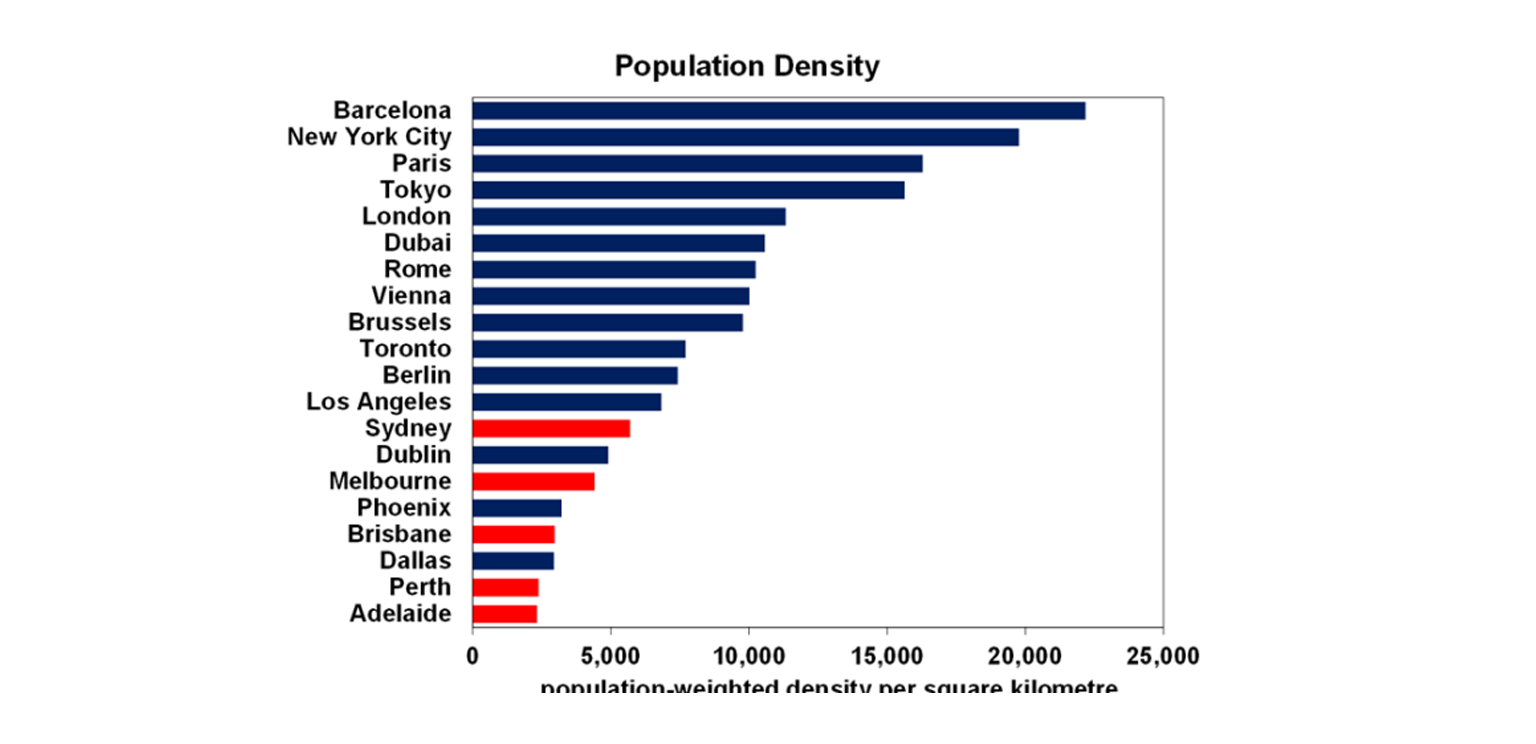
Thirdly, cyclical spending in the US as a share of GDP remain slow. For example, business and housing investment are around long term average levels as a share of GDP in contrast to the high levels in one or both seen prior to the tech wreck and GFC.
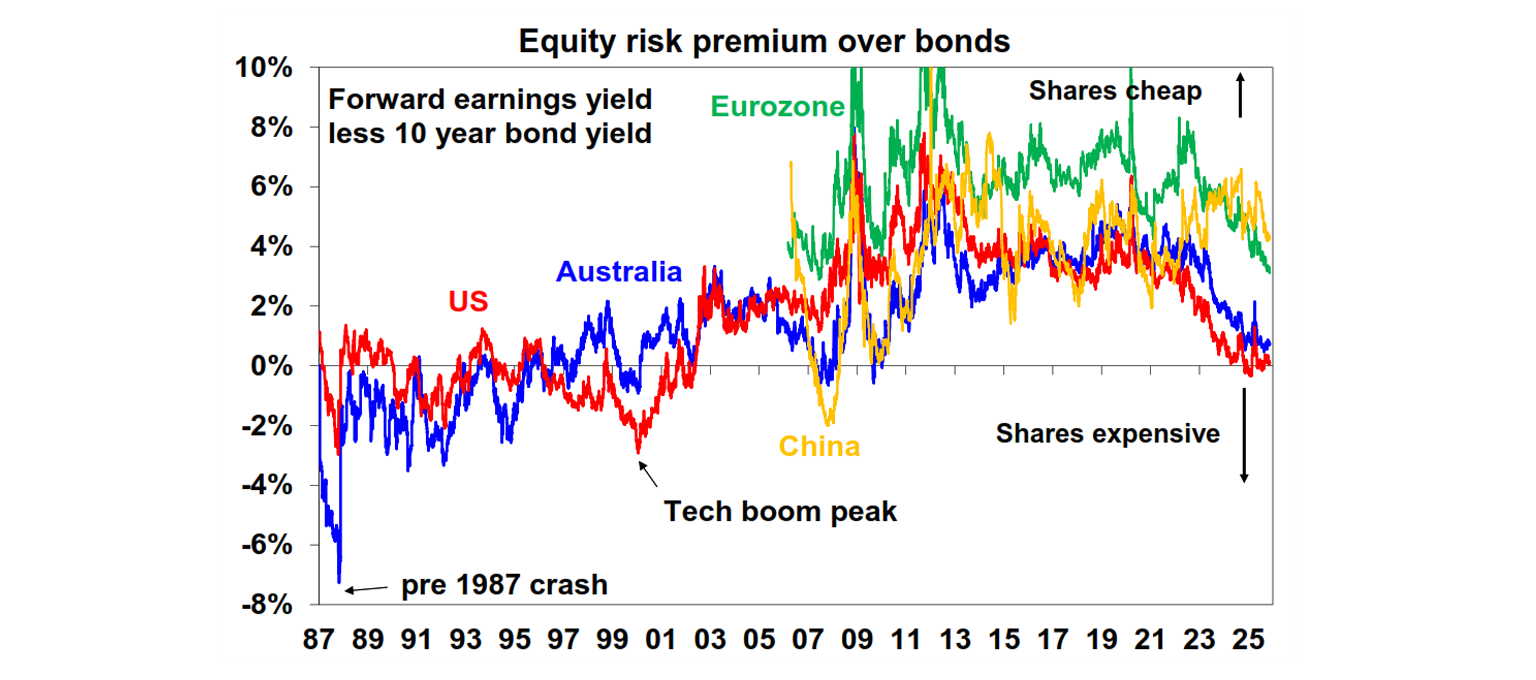
OI-20180719-chart3

Finally, while the rising Fed Funds rate and flattening traditional yield curve is consistent with tightening US monetary policy, it’s a long way from tight. Past US recessions have been preceded by the Fed Funds rates being well above inflation and nominal economic growth whereas it’s still a long way from either now. See the next chart.
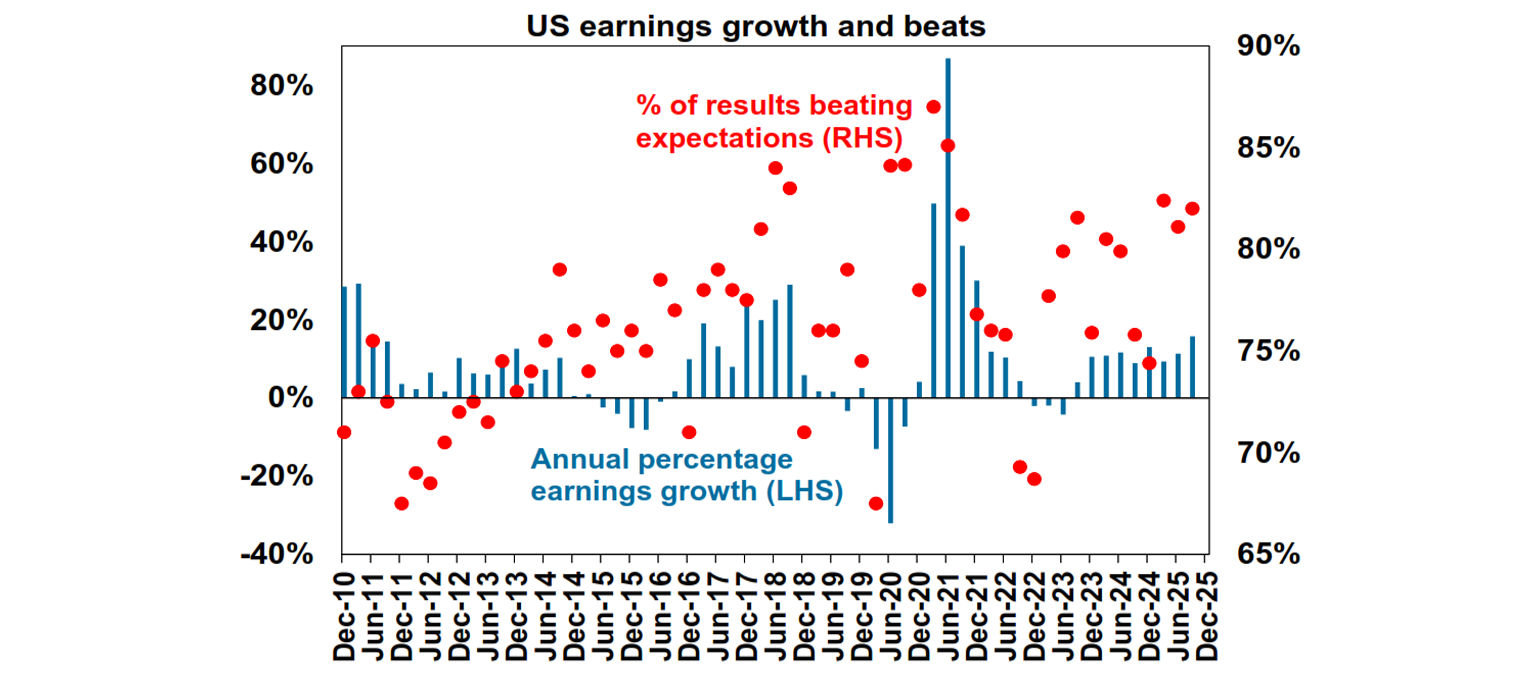
OI-20180719-chart4

US likely to see overheating before recession

Apart from the amber lights flashing from the flattening yield curve and very low unemployment our assessment is that a US recession is still some time away as it will take time for excesses to become extreme and US monetary policy to become tight. Looked at another way, the US is still more likely to overheat before it goes into recession. We have been thinking recession is a 2020 risk. The end of the current fiscal stimulus around then would also be consistent with this. However, given the current slow pace in terms of building excess, that 2020 is a presidential election year – do you really think Trump will allow the US to go off a fiscal cliff then? – and with 2020 being the consensus pick for a downturn, the risk is that it comes later. Of course, an escalating trade war could mess things up earlier, although we still see a negotiated solution. The rising US budget deficit is a concern but it’s more of an issue for when the economy turns down as this is when investors will start to worry about its sustainability. And of course a 1987 style share market crash cannot be ruled out but probably requires a share market blow off before hand. In the meantime, the Fed has more tightening to do and while sharemarket volatility is likely to remain high as US inflation and short rates rise, excesses gradually build and given risks around Trump and trade, with recession still a way off the US and global share bull market likely still has some way to go.

Important notes

While every care has been taken in the preparation of this article, AMP Capital Investors Limited (ABN 59 001 777 591, AFSL 232497) and AMP Capital Funds Management Limited (ABN 15 159 557 721, AFSL 426455) makes no representations or warranties as to the accuracy or completeness of any statement in it including, without limitation, any forecasts. Past performance is not a reliable indicator of future performance. This article has been prepared for the purpose of providing general information, without taking account of any particular investor’s objectives, financial situation or needs. An investor should, before making any investment decisions, consider the appropriateness of the information in this article, and seek professional advice, having regard to the investor’s objectives, financial situation and needs. This article is solely for the use of the party to whom it is provided.